
Thu Dau Mot University Journal of Science

Search Papers
3 papers
The administrative merger in Southeast Vietnam has fundamentally reshaped regional governance, spatial configurations, and development priorities, creating urgent requirements for a more integrated approach to science and technology (S&T) human resource development. To assess the implications of this restructuring, the study employs a mixed-methods design that combines institutional diagnostics, comparative policy analysis, and quantitative evaluation of workforce indicators. Empirical data are sourced from national statistical agencies, ministerial datasets, provincial development reports, and international benchmarking studies. The analysis focuses on the S&T workforce within the newly configured administrative units of expanded Ho Chi Minh City, Dong Nai, and Tay Ninh, examining competency structures, spatial distribution, coordination mechanisms, and post-merger system dynamics. The findings reveal significant disparities in qualification profiles, weak cross-provincial linkages in training and research, and limited alignment between workforce planning and emergent regional development trajectories. Despite these constraints, the merger presents opportunities to consolidate training capacity, strengthen innovation networks, and enhance talent mobility. The study argues for a coordinated regional S&T human resource strategy supported by institutional harmonization, a functionally differentiated training system, AI-enabled workforce planning tools, and expanded regional–national–international cooperation to advance a knowledge-based, climate-adaptive development pathway for Southeast Vietnam.
Isolating some fungi strains from diease roots of Dipterocarpus dyeri planted at the nursery in Dong Nai province
Tran Ngoc Hung
Dipterocarpus dyeri is a typical plant of tropical evergreen moist forest at Southeast Vietnam. These plants have been planted popularly at parks and urban streets for the shade and it has been commonly materials for timber industry. Multiplication of Dipterocarpus dyeri at nurseries could face to some diseases, such as the withered disease cause serial death. Our study isolated three disease fungi strains from the root areas of the diseased Dipterocarpus dyeri planted Ma Da nursery, Dong Nai province. Result of 28s rDNA sequencing showed these fungi belong to Ophiostoma eucalypticagena, Aspergillus nidulans and Collectotrichum gloeosporioides. This result is base for conducting the following studies to control the withered disease on Dipterocarpus dyeri at the nursery.
The Southeast of Vietnam as a cultural zone and roles of culture - people in the sustainable development of the region
Trần Ngọc Thêm
The Southeast plays a very important role in Vietnam’s economic development. Despite a high concentration of social scientists in the Southeast region, there remains a paradox that the Southeast culture has not been sufficiently researched into. Applying the method of cultural zoning based on the changes of the three dimensions Subject – Space - Time developed by the author, the article concludes that the Southeast is a separate cultural zone besides the Southwest and lists some typical characteristics of the Southeast in terms of cultural elements (focusing on the organizational culture) and the system of cultural personality characteristics of Vietnamese people in the Southeast. An analysis of the Human Development Index (HDI) of the Southeast shows that this development is unbalanced and unsustainable. To achieve balance and sustainability, more investment must be made on the culture and the people; community-village type behaviors should be replaced by community-society type behaviors; and the urban way of living, the urban culture and good urban citizen character should be promoed while limiting the rural/agricultural lifestyle and characteristics.
Publication Information
Publisher
Thu Dau Mot University, Viet Nam
Editor-in-Chief

Assoc. Prof. Nguyen Van Hiep
Thu Dau Mot University
Thu Dau Mot University
Editorial Board
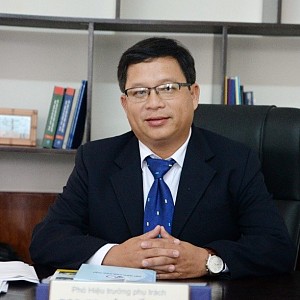
Assoc. Prof. Le Tuan Anh
Thu Dau Mot University
Thu Dau Mot University

PhD. Nguyen Quoc Cuong
Thu Dau Mot University
Thu Dau Mot University

PhD. Doan Ngoc Xuan
Thu Dau Mot University
Thu Dau Mot University

PhD. Nguyen Khoa Truong An
Thu Dau Mot University
Thu Dau Mot University

Assoc. Prof. Nguyen Thanh Binh
Thu Dau Mot University
Thu Dau Mot University

PhD. Le Thi Thuy Dung
Thu Dau Mot University
Thu Dau Mot University

PhD. Ngo Hong Diep
Thu Dau Mot University
Thu Dau Mot University
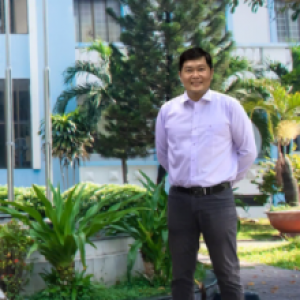
PhD. Nguyen Duc Dat Duc
Ho Chi Minh City University of Industry and Trade
Ho Chi Minh City University of Industry and Trade

Assoc. Prof. Nguyen Van Duc
Animal Husbandry Association of Vietnam
Animal Husbandry Association of Vietnam

PhD. Nguyen Thi Nhat Hang
Department of Education and Training of Binh Duong Province
Department of Education and Training of Binh Duong Province

PhD. Nguyen Thi Cam Le
Vietnam Aviation Academy
Vietnam Aviation Academy

PhD. Trần Hạnh Minh Phương
Thu Dau Mot University
Thu Dau Mot University
M.A. Pham Van Thinh
Thu Dau Mot University
Thu Dau Mot University

PhD. Nguyen Thi Lien Thuong
Thu Dau Mot University
Thu Dau Mot University
Prof. Le Quang Tri
Can Tho University
Can Tho University

Prof. Banh Quoc Tuan
Thu Dau Mot University
Thu Dau Mot University