
Thu Dau Mot University Journal of Science

Search Papers
3 papers
The administrative merger in Southeast Vietnam has fundamentally reshaped regional governance, spatial configurations, and development priorities, creating urgent requirements for a more integrated approach to science and technology (S&T) human resource development. To assess the implications of this restructuring, the study employs a mixed-methods design that combines institutional diagnostics, comparative policy analysis, and quantitative evaluation of workforce indicators. Empirical data are sourced from national statistical agencies, ministerial datasets, provincial development reports, and international benchmarking studies. The analysis focuses on the S&T workforce within the newly configured administrative units of expanded Ho Chi Minh City, Dong Nai, and Tay Ninh, examining competency structures, spatial distribution, coordination mechanisms, and post-merger system dynamics. The findings reveal significant disparities in qualification profiles, weak cross-provincial linkages in training and research, and limited alignment between workforce planning and emergent regional development trajectories. Despite these constraints, the merger presents opportunities to consolidate training capacity, strengthen innovation networks, and enhance talent mobility. The study argues for a coordinated regional S&T human resource strategy supported by institutional harmonization, a functionally differentiated training system, AI-enabled workforce planning tools, and expanded regional–national–international cooperation to advance a knowledge-based, climate-adaptive development pathway for Southeast Vietnam.
CASE STUDY: APPLYING INFORMATION TECHNOLOGY IN TEACHING FIRST GRADE MATHEMATICS TO DEVELOP COMPREHENSIVE COMPETENCIES FOR PRIMARY SCHOOL STUDENTS
Chu Thi Ngoc Diep, Tran Thi Yen Giang, Pham Quynh Giang
This study evaluated the effectiveness of Information Technology (IT) applications in teaching Grade 1 mathematics to develop students' comprehensive competencies. Tools such as Canva, Twinkl, and online educational games were integrated into lessons to create an engaging learning environment and to enhance students' skills. Significant improvements were observed: students’ ability to sequence numbers increased from 33% to 83.3%, number comparison skills improved from 31% to 90.5%, and effective teamwork skills rose from 40% to 95.2%. Additionally, self-directed learning levels increased from 24% to 85.7%, and creativity in problem-solving grew from 33% to 80.9%. These results underscore the positive impact of IT in developing primary students' academic and collaborative skills.
Mathematics education contributes to the formation and development of students' key qualities, general abilities and mathematical abilities. In particular, the ability to solve mathematical problems is one of the core elements of mathematical ability, helping students develop key knowledge and skills and creating opportunities for students to experience and apply practical mathematics. The study proposes some measures to foster students' mathematical problem-solving capacity in teaching the topic "Algebra" (Math 10). Teaching practice shows that the proposed measures are appropriate and feasible, initially contributing to improving the quality of teaching and meeting the goals of educational innovation specified in the General Education Program math pass 2018.
Publication Information
Publisher
Thu Dau Mot University, Viet Nam
Editor-in-Chief

Assoc. Prof. Nguyen Van Hiep
Thu Dau Mot University
Thu Dau Mot University
Editorial Board
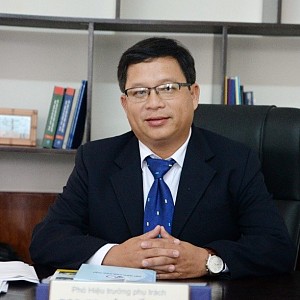
Assoc. Prof. Le Tuan Anh
Thu Dau Mot University
Thu Dau Mot University

PhD. Nguyen Quoc Cuong
Thu Dau Mot University
Thu Dau Mot University

PhD. Doan Ngoc Xuan
Thu Dau Mot University
Thu Dau Mot University

PhD. Nguyen Khoa Truong An
Thu Dau Mot University
Thu Dau Mot University

Assoc. Prof. Nguyen Thanh Binh
Thu Dau Mot University
Thu Dau Mot University

PhD. Le Thi Thuy Dung
Thu Dau Mot University
Thu Dau Mot University

PhD. Ngo Hong Diep
Thu Dau Mot University
Thu Dau Mot University

PhD. Nguyen Duc Dat Duc
Ho Chi Minh City University of Industry and Trade
Ho Chi Minh City University of Industry and Trade

Assoc. Prof. Nguyen Van Duc
Animal Husbandry Association of Vietnam
Animal Husbandry Association of Vietnam

PhD. Nguyen Thi Nhat Hang
Department of Education and Training of Binh Duong Province
Department of Education and Training of Binh Duong Province

PhD. Nguyen Thi Cam Le
Vietnam Aviation Academy
Vietnam Aviation Academy

PhD. Trần Hạnh Minh Phương
Thu Dau Mot University
Thu Dau Mot University

M.A. Pham Van Thinh
Thu Dau Mot University
Thu Dau Mot University

PhD. Nguyen Thi Lien Thuong
Thu Dau Mot University
Thu Dau Mot University
Prof. Le Quang Tri
Can Tho University
Can Tho University
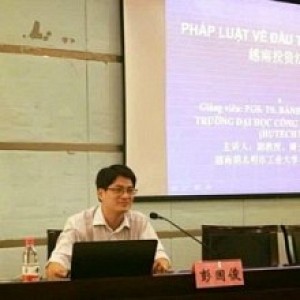
Prof. Banh Quoc Tuan
Thu Dau Mot University
Thu Dau Mot University