
Thu Dau Mot University Journal of Science

Search Papers
3 papers
AGRICULTURAL TOURISM IN THE MEKONG DELTA, VIETNAM: STATE POLICIES, ENTERPRISE STRATEGIES AND COMMUNITY PARTICIPATION
Ngo Thi Phuong Lan, Huynh Ngoc Thu
Agricultural tourism (agritourism) has become an emerging
development pathway in the Mekong Delta, where agriculture, culture,
and water-based ecosystems intersect to form distinctive rural
landscapes. Within Vietnam’s broader agenda of rural restructuring and
sustainable development, agritourism in the region has gradually
evolved from small-scale household initiatives into a more organized
sector shaped by the interaction of state policies, enterprise strategies,
and community participation. This study examines how these three
actors collectively influence agritourism development in the Mekong
Delta. Using a qualitative research design and an embedded case study
approach, the analysis draws on national and provincial policy
documents, industry reports, and representative agritourism models
such as My Khanh Tourist Village, Con Son Community Cooperative,
Con Chim Ecotourism Site, Con Ong experiential farm, and the Dinh
Yen Mat weaving craft village. The findings indicate that since 2010,
the Vietnamese government has established a policy framework
promoting experiential agriculture-based tourism, regional
connectivity, climate-resilient development, and cultural preservation,
thereby enabling enterprises to upgrade facilities, diversify tourism
services, and expand regional tour circuits. At the same time, local
communities have reorganized tourism activities through cooperative
and community-based models that integrate agricultural practices,
culinary heritage, and craft traditions into visitor experiences.
Successful initiatives demonstrate improvements in income generation,
employment opportunities, cultural continuity, and environmental
awareness. However, agritourism in the Mekong Delta still faces
challenges, including fragmented policy implementation, limited
destination management capacity, weak interprovincial coordination,
repetitive tourism products, and environmental pressures associated
with climate change. The study argues that the sustainability of
agritourism in the region depends on strengthening the alignment
between policy frameworks, enterprise innovation, and communitybased stewardship.
THE INFLUENCE OF RELIGION ON THE SUSTAINABLE DEVELOPMENT OF LOCAL ETHNIC MINORITIES IN THE SOUTHERN CENTRAL HIGHLANDS TODAY
Huynh Ngoc Thu, Le Thi My Hà
Sustainable development is a crucial issue that has been particularly emphasized by the Party and the Government of Vietnam, especially in areas with a large population of ethnic minorities. The Southern Central Highlands is currently home to nearly 50 ethnic groups, among which local ethnic minorities such as the Ê Đê, K’ho, and M’nông are striving to develop their economy, culture, and society sustainably. However, this development process faces numerous challenges from both objective and subjective factors, including natural conditions, government development policies, ethnic psychology, and religious factors. At present, Catholicism and Protestantism are the two main religions within the ethnic minority communities of the Southern Central Highlands. Introduced to the region from the late 19th to early 20th century, these two religions flourished in the second half of the 20th century and have become major elements in the spiritual lives of the communities. Religion has had and continues to have significant impacts on the economic, cultural, and social development of local ethnic minorities, contributing positively to the process of sustainable development. This article uses data collected from the community through participant observation, in-depth interviews, and survey questionnaires to analyze the impact of religion on the economic, cultural, environmental, and social aspects of local ethnic minorities in the South Central Highlands in the context of sustainable development.
Cultural practices of the Khmer in Binh Duong - Historical particularism approach
PhD. Tran Hanh Minh Phuong
In 2014, Binh Duong has 2.885 the Khmer people, being the second largest ethnic minority compared to the Hoa people. They have contributed to the multi-ethnic culture of Binh Duong. Hundreds of works on the Khmer in the Mekong Delta considered their culture as a typical of Theravada Buddhist culture in Vietnam but this proposition is not suitable for the Khmer community in An Binh, Phu giao district who is this object of this study. By qualitative data sources from in-depth interviews, participant observations and approach to the historical particularism, this study documented the cultural characteristics of the Khmer in An Binh and analyzed the factors that make culture of the Khmer in An Binh different from the culture of the Khmer in the Mekong Delta. Natural conditions and socio-historical context make the cultural practices of the Khmer in An Binh more similar to the culture of the ethnic groups in the Central Highlands than the Khmer culture in the Mekong delta, especially, customs and folk beliefs.
Publication Information
Publisher
Thu Dau Mot University, Viet Nam
Editor-in-Chief

Assoc. Prof. Nguyen Van Hiep
Thu Dau Mot University
Thu Dau Mot University
Editorial Board

Assoc. Prof. Le Tuan Anh
Thu Dau Mot University
Thu Dau Mot University

PhD. Nguyen Quoc Cuong
Thu Dau Mot University
Thu Dau Mot University

PhD. Doan Ngoc Xuan
Thu Dau Mot University
Thu Dau Mot University

PhD. Nguyen Khoa Truong An
Thu Dau Mot University
Thu Dau Mot University

Assoc. Prof. Nguyen Thanh Binh
Thu Dau Mot University
Thu Dau Mot University

PhD. Le Thi Thuy Dung
Thu Dau Mot University
Thu Dau Mot University

PhD. Ngo Hong Diep
Thu Dau Mot University
Thu Dau Mot University
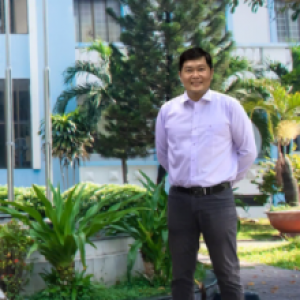
PhD. Nguyen Duc Dat Duc
Ho Chi Minh City University of Industry and Trade
Ho Chi Minh City University of Industry and Trade

Assoc. Prof. Nguyen Van Duc
Animal Husbandry Association of Vietnam
Animal Husbandry Association of Vietnam

PhD. Nguyen Thi Nhat Hang
Department of Education and Training of Binh Duong Province
Department of Education and Training of Binh Duong Province

PhD. Nguyen Thi Cam Le
Vietnam Aviation Academy
Vietnam Aviation Academy

PhD. Trần Hạnh Minh Phương
Thu Dau Mot University
Thu Dau Mot University

M.A. Pham Van Thinh
Thu Dau Mot University
Thu Dau Mot University

PhD. Nguyen Thi Lien Thuong
Thu Dau Mot University
Thu Dau Mot University

Prof. Le Quang Tri
Can Tho University
Can Tho University

Prof. Banh Quoc Tuan
Thu Dau Mot University
Thu Dau Mot University