
Thu Dau Mot University Journal of Science

Search Papers
27 papers
The paper demonstrates the role of globalization and localization in the process of Vietnam’s interaction and integration with other cultures, causing changes in Vietnamese language. Globalization is defined as the free movement of goods, services and people of the worldwide scope across the borders of countries, resulted from the opening up of the global economy and advances of technologies. The increasing interconnectedness and integration of the economies of the world furnish more influx of information among countries which do not have anything in common and Internet and social media well contribute to such spread. Not only the pros but the cons of globalization are used to explain the part of localization as the entire process of adapting a product or content to a specific location or market. The paper indicates localization as the Vietnamese people’s endeavor to adapt Vietnamese language to the world while protecting and enhancing the national characters. The differences between localization and globalization are analyzed to demonstrate the value and requirements of localization in the present time. The influences of Sino-Vietnamese and French language are also found out as evidences of the phenomena. The changes of Vietnamese language from globalization and localization are illustrated with devices, ideas and images referring to the objects, actions or ideas.
The Southeast of Vietnam as a cultural zone and roles of culture - people in the sustainable development of the region
Trần Ngọc Thêm
The Southeast plays a very important role in Vietnam’s economic development. Despite a high concentration of social scientists in the Southeast region, there remains a paradox that the Southeast culture has not been sufficiently researched into. Applying the method of cultural zoning based on the changes of the three dimensions Subject – Space - Time developed by the author, the article concludes that the Southeast is a separate cultural zone besides the Southwest and lists some typical characteristics of the Southeast in terms of cultural elements (focusing on the organizational culture) and the system of cultural personality characteristics of Vietnamese people in the Southeast. An analysis of the Human Development Index (HDI) of the Southeast shows that this development is unbalanced and unsustainable. To achieve balance and sustainability, more investment must be made on the culture and the people; community-village type behaviors should be replaced by community-society type behaviors; and the urban way of living, the urban culture and good urban citizen character should be promoed while limiting the rural/agricultural lifestyle and characteristics.
Cultural practices of the Khmer in Binh Duong - Historical particularism approach
PhD. Tran Hanh Minh Phuong
In 2014, Binh Duong has 2.885 the Khmer people, being the second largest ethnic minority compared to the Hoa people. They have contributed to the multi-ethnic culture of Binh Duong. Hundreds of works on the Khmer in the Mekong Delta considered their culture as a typical of Theravada Buddhist culture in Vietnam but this proposition is not suitable for the Khmer community in An Binh, Phu giao district who is this object of this study. By qualitative data sources from in-depth interviews, participant observations and approach to the historical particularism, this study documented the cultural characteristics of the Khmer in An Binh and analyzed the factors that make culture of the Khmer in An Binh different from the culture of the Khmer in the Mekong Delta. Natural conditions and socio-historical context make the cultural practices of the Khmer in An Binh more similar to the culture of the ethnic groups in the Central Highlands than the Khmer culture in the Mekong delta, especially, customs and folk beliefs.
Publication Information
Publisher
Thu Dau Mot University, Viet Nam
Editor-in-Chief

Assoc. Prof. Nguyen Van Hiep
Thu Dau Mot University
Thu Dau Mot University
Editorial Board
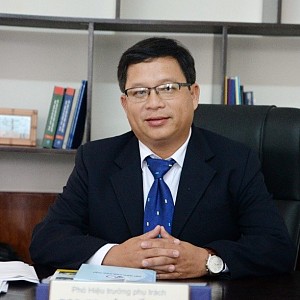
Assoc. Prof. Le Tuan Anh
Thu Dau Mot University
Thu Dau Mot University

PhD. Nguyen Quoc Cuong
Thu Dau Mot University
Thu Dau Mot University

PhD. Doan Ngoc Xuan
Thu Dau Mot University
Thu Dau Mot University

PhD. Nguyen Khoa Truong An
Thu Dau Mot University
Thu Dau Mot University

Assoc. Prof. Nguyen Thanh Binh
Thu Dau Mot University
Thu Dau Mot University

PhD. Le Thi Thuy Dung
Thu Dau Mot University
Thu Dau Mot University

PhD. Ngo Hong Diep
Thu Dau Mot University
Thu Dau Mot University
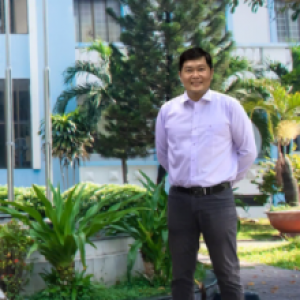
PhD. Nguyen Duc Dat Duc
Ho Chi Minh City University of Industry and Trade
Ho Chi Minh City University of Industry and Trade
Assoc. Prof. Nguyen Van Duc
Animal Husbandry Association of Vietnam
Animal Husbandry Association of Vietnam

PhD. Nguyen Thi Nhat Hang
Department of Education and Training of Binh Duong Province
Department of Education and Training of Binh Duong Province

PhD. Nguyen Thi Cam Le
Vietnam Aviation Academy
Vietnam Aviation Academy

PhD. Trần Hạnh Minh Phương
Thu Dau Mot University
Thu Dau Mot University
M.A. Pham Van Thinh
Thu Dau Mot University
Thu Dau Mot University

PhD. Nguyen Thi Lien Thuong
Thu Dau Mot University
Thu Dau Mot University
Prof. Le Quang Tri
Can Tho University
Can Tho University

Prof. Banh Quoc Tuan
Thu Dau Mot University
Thu Dau Mot University