
Thu Dau Mot University Journal of Science

Search Papers
10 papers
With the rapid advancement of AI, its integration into EFL education has become increasingly prominent. This small-scale study provides insights from a Taiwanese higher education context, drawing on both EFL teachers’ and students’ perspectives. Guided by Cognitive Load Theory (CLT), the study examines how AI is used to support language learning tasks, involving varying levels of cognitive load, and explores its potential role in managing learners’ cognitive processing demands. A mixed-methods approach was employed, with quantitative and qualitative data collected through questionnaires. The study also explores patterns of AI usage, perceptions of its effectiveness, challenges encountered, and attitudes toward its future role in English education.
The findings indicate that AI has become a widely used support tool in EFL learning. Students primarily use AI tools, such as ChatGPT and Grammarly, for writing, information searching, and grammar support, i.e., tasks that typically impose high intrinsic cognitive load on EFL learners. In contrast, teachers mainly employ AI for lesson preparation, material design, and efficiency enhancement, thereby reducing extraneous cognitive load. Although both groups hold positive attitudes toward AI integration, teachers demonstrate a more cautious approach due to concerns regarding usability, pedagogical alignment, data privacy, and potential students’ overreliance. From a CLT perspective, the results suggest that while AI can reduce extraneous cognitive load and provide procedural support, excessive dependence on AI may limit learners’ germane cognitive load by reducing their active engagement in language processing. Students largely agree that AI cannot replace human teachers, particularly in areas involving emotional support, interaction, and guidance. The data indicate that effective AI integration requires institutional support, professional training, and the development of digital literacy to ensure a balanced, human-centered approach to AI-enhanced EFL education.
This mixed-methods study examines how fourth-year English majors at Thu Dau Mot University engage in Zalo-based classroom discussions. Using a convergent parallel design, data were collected through a questionnaire (N = 112) and semi-structured interviews (N = 8) to explore behavioral, cognitive, and emotional dimensions of engagement. Findings reveal that Zalo is primarily used for task coordination and passive monitoring, with limited proactive discussion. Students value its functions for planning and language accuracy but perceive discussions as low in intellectual depth. Emotionally, Zalo fosters social connection and comfort in interacting with peers and lecturers but also introduces pressure to keep up and reluctance to express dissent. The study highlights Zalo’s dual role as a facilitator of convenience and a constraint on deeper learning, suggesting the need for intentional instructional design to promote critical thinking and inclusive dialogue.
Undergraduate research is widely recognized as a meaningful practice that develops students’ critical thinking, problem‑solving, and science identity, yet student engagement remains uneven due to multiple factors. To address this issue, this mixed-methods study examines undergraduate students’ engagement in research at a Vietnamese university, focusing on their attitudes, perceived support, and intentions to participate. Survey data (N = 164) and interviews (N = 8) reveal a clear divide between students’ positive views of research outcomes and their ambivalence toward the research process. Although students believe lecturers are supportive, they report low comfort in seeking help, limited peer encouragement, and little awareness of institutional research policies. Students express moderate intention to conduct a research project but show strong reluctance toward presenting or publishing their work. The qualitative findings highlight psychological barriers, unclear pathways, and an outcome-oriented mindset. The study argues that current support structures are passive and insufficient. Institutions should implement more visible, structured mentorship to strengthen students’ confidence and foster a more active undergraduate research culture.
AI INTEGRATION IN TEACHING AND LEARNING: FACULTY TRAINING FOR THE USE OF ARTIFICIAL INTELLIGENCE IN HIGHER EDUCATION IN VIETNAM
Le Ho Van Phang, Luu Thao Ly, Giang Gia Bao, Vu Hoang Long, Nguyen Tam Nhu Ngoc
This study examines the relationships between Training Quality (TQ), Institutional Support (IS), Faculty Readiness (FR), and Perceived Effectiveness (PE) in the context of artificial intelligence (AI) integration in higher education institutions (HEIs) in Vietnam. Employing Partial Least Squares Structural Equation Modeling (PLS-SEM), data from 418 faculty members from higher education institutions (HEIs) in Vietnam were analyzed to identify key factors influencing the adoption of AI in teaching. The findings reveal that both TQ and IS significantly enhance FR, underscoring the critical importance of comprehensive training programs and institutional resources for preparing faculty to adopt AI. Furthermore, FR has a substantial impact on PE and serves as a mediator between TQ and PE, as well as IS and PE. This highlights the pivotal role of faculty readiness in transforming training and support into perceived improvements in teaching effectiveness. The model demonstrates high predictive relevance for both FR (Q² = 0.55) and PE (Q² = 0.60), suggesting the robustness of the theoretical framework. Despite the study’s limitations, including its focus on Vietnamese HEIs and cross-sectional design, it provides valuable insights for designing effective faculty development and institutional support strategies to facilitate AI integration
Non-English Majors’ Perceptions of Ethical Use and Plagiarism Risks of AI Tools in English Academic Writing: A Study at Thu Dau Mot University
Ho Trung Hau, Le Thi My Duyen, Hoang Doan Gia Han
This study explores non-English major students’ perceptions of the ethical use and plagiarism risks associated with Artificial Intelligence (AI) tools in academic writing at Thu Dau Mot University. As AI technologies become increasingly integrated into higher education, concerns about academic integrity, authorship, and originality have intensified. Using a convergent mixed-methods design, data were collected from 108 students through questionnaires and from six participants via semi-structured interviews. Quantitative findings revealed that a majority of students acknowledged the importance of ethical AI use and expressed support for clearer institutional guidelines and teacher training on responsible AI integration. However, uncertainty persisted regarding the ethical boundaries between legitimate assistance and academic misconduct. Qualitative data reinforced these findings, highlighting students’ awareness of AI’s dual role in enhancing writing skills and posing plagiarism risks, particularly through diminished creativity and loss of personal voice. The study underscores the need for localized policies, updated plagiarism regulations, and pedagogical strategies to guide responsible AI use in EFL writing contexts.
EFFECTIVENESS OF E-LEARNING IN HIGHER EDUCATION – A CASE STUDY IN DONG NAI PROVINCE
Trinh Vu Thanh Tuyen
E-learning has many exceptional advantages in teaching and training, and it has been applied in many universities and colleges in Dong Nai with a variety of scopes and levels; especially at a time with the motto "learning everywhere at any time", Dong Nai province sees this as a good opportunity to accelerate digital transformation in education. Simultaneously, underlining that online teaching is not only a temporary solution during epidemic seasons, but also an important way to improve educational quality. The research is carried out to examine the realities of online training in higher education in order to satisfy the demands of society's need for high-quality human resources. In addition, lecturer questionnaire and student questionnaire design would be used to collect quantitative data to answer research questions through the employment of questionnaire. The survey result showed that an average score of 4.03 to 4.19 with the “agree” level in student survey and another 4.19 to 4.29 in lecturer survey. It is indicated that the attitudes of students and lecturers on the survey items are very similar through two surveys. As a result, e-learning plays an important role in conveying the knowledge to all students at anytime and anywhere.
Enhancing students’ productive skills in English Language Teaching through Project-Based Learning at Foreign Trade University – HCMC campus
Dang Thi My Dung, Phan Thi Nhat Phuong, Pham Nguyen Khanh Thuong, Ngo Thi Huyen Trang, Vu Thi My Hao
This article presents the results of a study on the current application of Project-based learning (PBL) in the teaching of English productive skills to students at the Foreign Trade University - Ho Chi Minh City Campus and how students can improve them. The research also provides insights into the expectations of students and entrepreneurs on that matter. The research group used the 5-point Likert scale in a questionnaire to collect data from students and interviewed FTU - HCMC’s English teachers and entrepreneurs to give further suggestions. Wilcoxon signed-rank test was used to analyze whether or not there is a significant difference in students’ English productive skills before and after using PBL in English language learning. This study found a significant difference in speaking skills of FTU - HCMC students before and after participating in PBL activities. The students improved their comprehension, range and the ability to deliver their ideas to the target reader for writing skills. However, no difference was found in their content, cohesion, and accuracy. Interviewed teachers and entrepreneurs supported the implementation of PBL in schools. Overall, PBL is encouraged in the settings of higher education institutions.
The blended learning: English majors’ perception of its effects on their writing skills
Huỳnh Thị Bích Phượng
ABSTRACT
With the ever-increasing development of technology, online teaching is more readily accepted as a viable component in teaching and learning, and blended learning, the combining of online and face-to-face learning, is becoming commonplace in many higher education institutions. Definitely, challenges cannot be denied; however, it has been suggested and deployed globally including Vietnam. To some extent, both teachers and students present their positive points of view on this learning approach. However, there are a huge number of students expressing their lack of understanding the blended learning, which negatively affects their attitudes towards deployment of this learning approach as well as particular reference to motivation and interest. This paper is to assess the English majors’ perceptions on blended learning environment at tertiary level, which especially affects their learning the writing skills.
Results of the study are absolutely helpful for the author to understand the students’ perceptions of the effects on the blended learning; then, she can give some suggestions to enhance the learning of writing skills in the light of blended learning.
Key word: Blended learning, academic writing, perception
Suggestions for training strategy of Thu Dau Mot University in the process of approaching industrial revolution 4.0
Trinh Phuong Thao
Industrial Revolution 4.0 has become an indispensable trend in the development process of Vietnam and is increasingly applied in university education. The essence of the Industrial Revolution 4.0 is the application of technology, data science and the use of artificial intelligence for production and human life. In this impact, modern education, especially higher education, is the field most affected. Online teaching, with tools to support the teaching of the digital age, has been changing dramatically in the teaching and learning situation in universities, helping to modernize education and integrate with the world, but there are many issues that teachers and managers must consider to change teaching methods and training strategies, in order to deliver the best results. Starting from the actual situation, we propose specific and comprehensive measures to improve the teaching efficiency of Thu Dau Mot University and, to meet the needs of Vietnamese society and the development of Industrial Revolution 4.0.
Innovative Techniques and the Integrated Model of Teaching the First Accounting Course for English as Second Language learners
Mary Precy Aguilar-Lego
Across the world, the first accounting course provides serious challenges for teaching. These arise from powerful negative perceptions which include the anxiety associated with tertiary-level study and the differing backgrounds or majors of students required to take the course. This paper outlines some examples of nontraditional teaching techniques and highlights how the course could be best structured to overcome such negative views while at the same time responding to the changes in the industry. The design and content of the proposed course emphasizes the USER approach and is directed to English as second language learners. This is a case study in an Australian offshore campus and is the end result of the progressive improvement in the structure and delivery of the course.
Publication Information
Publisher
Thu Dau Mot University, Viet Nam
Editor-in-Chief

Assoc. Prof. Nguyen Van Hiep
Thu Dau Mot University
Thu Dau Mot University
Editorial Board

Assoc. Prof. Le Tuan Anh
Thu Dau Mot University
Thu Dau Mot University

PhD. Nguyen Quoc Cuong
Thu Dau Mot University
Thu Dau Mot University

PhD. Doan Ngoc Xuan
Thu Dau Mot University
Thu Dau Mot University

PhD. Nguyen Khoa Truong An
Thu Dau Mot University
Thu Dau Mot University

Assoc. Prof. Nguyen Thanh Binh
Thu Dau Mot University
Thu Dau Mot University

PhD. Le Thi Thuy Dung
Thu Dau Mot University
Thu Dau Mot University

PhD. Ngo Hong Diep
Thu Dau Mot University
Thu Dau Mot University

PhD. Nguyen Duc Dat Duc
Ho Chi Minh City University of Industry and Trade
Ho Chi Minh City University of Industry and Trade

Assoc. Prof. Nguyen Van Duc
Animal Husbandry Association of Vietnam
Animal Husbandry Association of Vietnam

PhD. Nguyen Thi Nhat Hang
Department of Education and Training of Binh Duong Province
Department of Education and Training of Binh Duong Province

PhD. Nguyen Thi Cam Le
Vietnam Aviation Academy
Vietnam Aviation Academy

PhD. Trần Hạnh Minh Phương
Thu Dau Mot University
Thu Dau Mot University

M.A. Pham Van Thinh
Thu Dau Mot University
Thu Dau Mot University

PhD. Nguyen Thi Lien Thuong
Thu Dau Mot University
Thu Dau Mot University

Prof. Le Quang Tri
Can Tho University
Can Tho University
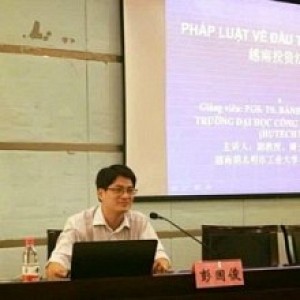
Prof. Banh Quoc Tuan
Thu Dau Mot University
Thu Dau Mot University