
Thu Dau Mot University Journal of Science

Search Papers
3 papers
DESIGN AND IMPLEMENTATION OF AN IoT-BASED SMART HOME MODEL WITH VOICE CONTROL AND ENVIRONMENT-BASED AUTOMATION
Ho Duc Chung
This paper presents the design and implementation of an Internet of Things (IoT)-based smart home model that integrates voice control and environment-based automation. The proposed system uses an ESP32 microcontroller as the main IoT communication module and an Arduino Mega 2560 for local hardware control. Several sensors and modules, including a DHT22 temperature-humidity sensor, MQ-4 gas sensor, rain sensor, and RFID authentication module, are integrated to support environmental monitoring, safety detection, and automated device operation.
The system communicates with the E-Ra IoT platform to provide real-time monitoring and remote control through a web-based interface, while voice commands are implemented using Google Assistant. A physical prototype was developed and tested under normal operating conditions. Experimental results show that the system operates reliably and responds quickly to control commands, with an average response time of less than 1 second for basic device operations. The proposed model demonstrates the feasibility of building a low-cost and flexible smart home system suitable for research, educational applications, and small-scale residential environments.
DESIGN AND VALIDATION OF AN IOT-INTEGRATED AUTOMATED DISTILLATION SYSTEM WITH PID TEMPERATURE CONTROL
Nguyen Anh Vu, Nguyen Thanh Doan, Nguyen Phuong Tra
This paper presents the design, implementation, and empirical evaluation of a sophisticated automated alcohol distillation system. The system integrates modern control theory with Internet of Things (IoT) technology to overcome the limitations of traditional manual distillation, which often suffers from inconsistent product quality, high labor dependency, and significant safety risks. The core of the system employs a REX-C100 PID temperature controller for precise thermal regulation, an ESP8266 microcontroller for IoT connectivity, and an array of sensors including a K-type thermocouple and an MQ-3 alcohol concentration sensor for comprehensive process monitoring and safety. A detailed mathematical model of the distillation process and an enhanced PID control algorithm with feedforward compensation are provided. Experimental results demonstrate a 50% reduction in processing time, an increase in process efficiency from 60% to 90%, and a remarkable improvement in product quality consistency from 70% to 95%, all while maintaining a temperature control accuracy of ±1°C. The system successfully enables remote monitoring and control via the Blynk IoT platform, establishing a robust framework for intelligent, safe, and efficient distillation applicable to both small-scale and industrial production
The Demonstration Device For Remote Light Control Via The Internet By Using MQTT Protocol And Dual-Chip ESP32
Vo Gia Thinh
In this article, the primary purpose is to design and implement a remote light control example that makes use of the Arduino IDE platform for programming, the MQTT protocol, and an ESP32 microcontroller, which has a dual-core CPU as well as Wi-Fi and Bluetooth capabilities. This aspect is related to the Internet of Things (IoT), which allows any fundamental device to be linked and become a smart device via the application of the Internet. As a result, these devices can be operated from a significantly long-distance, eliminating the need to physically interact with the switches to turn them on or off. The first part of the paper is a discussion of the fundamental theory that is provided to examine the potential of remote control methods, followed by a short overview of the Arduino integrated development environment (IDE), MQTT communication protocol, and PWM technique to regulate the brightness of lights. The second section is devoted to hands-on work, such as setting up an environment connection over the Internet, compiling and designing a printed circuit board (PCB).
Publication Information
Publisher
Thu Dau Mot University, Viet Nam
Editor-in-Chief

Assoc. Prof. Nguyen Van Hiep
Thu Dau Mot University
Thu Dau Mot University
Editorial Board
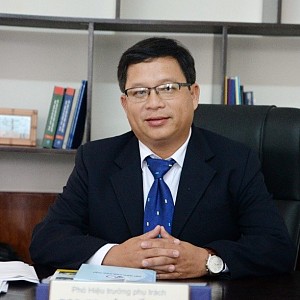
Assoc. Prof. Le Tuan Anh
Thu Dau Mot University
Thu Dau Mot University

PhD. Nguyen Quoc Cuong
Thu Dau Mot University
Thu Dau Mot University

PhD. Doan Ngoc Xuan
Thu Dau Mot University
Thu Dau Mot University

PhD. Nguyen Khoa Truong An
Thu Dau Mot University
Thu Dau Mot University

Assoc. Prof. Nguyen Thanh Binh
Thu Dau Mot University
Thu Dau Mot University

PhD. Le Thi Thuy Dung
Thu Dau Mot University
Thu Dau Mot University

PhD. Ngo Hong Diep
Thu Dau Mot University
Thu Dau Mot University

PhD. Nguyen Duc Dat Duc
Ho Chi Minh City University of Industry and Trade
Ho Chi Minh City University of Industry and Trade

Assoc. Prof. Nguyen Van Duc
Animal Husbandry Association of Vietnam
Animal Husbandry Association of Vietnam

PhD. Nguyen Thi Nhat Hang
Department of Education and Training of Binh Duong Province
Department of Education and Training of Binh Duong Province

PhD. Nguyen Thi Cam Le
Vietnam Aviation Academy
Vietnam Aviation Academy

PhD. Trần Hạnh Minh Phương
Thu Dau Mot University
Thu Dau Mot University
M.A. Pham Van Thinh
Thu Dau Mot University
Thu Dau Mot University

PhD. Nguyen Thi Lien Thuong
Thu Dau Mot University
Thu Dau Mot University
Prof. Le Quang Tri
Can Tho University
Can Tho University
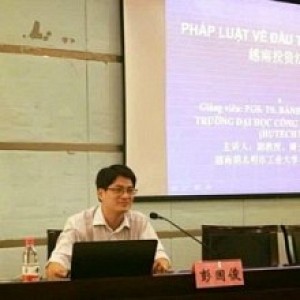
Prof. Banh Quoc Tuan
Thu Dau Mot University
Thu Dau Mot University