
Thu Dau Mot University Journal of Science

Search Papers
27 papers
Hazard Identification and Risk Assessment in Wastewater Treatment Plant of Di An City
Ho Tong Tron, Nguyen Hien Than
The wastewater treatment plant is an extremely important infrastructure to ensure the quality of life, water use of human life, and other ways to ensure water quality for the natural environment. In the operation of it, there are always potential hazards affecting the health of the workers working in the factory. The study was performed using the Semi-quantitative risk assessment method to calculate the values of operational risks in the water treatment plant (WWP). The results of the study obtained 18 high potential hazards that may lead to the present in the water treatment process. The hazards were the leakage of deodorizing towers and the generation of toxic emissions of dead microorganisms that have the highest value with a risk scale of 20 points- frequent impacts on employees. The study has also identified the dangers present in WWP and this will be the premise for mitigating solutions for problems occurring at its.
A study about the sustainable challenges of extended areas in Taiwan and lessons for Ho Chi Minh, Dong Nai and Binh Duong regions
Tran Dinh Hieu, Nguyen Hong Giang
This paper examines the main challenges of the processes of space and social policy change present to current urbanization trends of Taiwan. The chapter argues that one of the main challenges is economic growth, increasing integration into the global economy and making Taiwan competitive in the global economy. This process leads to the growth of large urban regions that present many challenges to the urban development in the future. In particular, the paper focuses on the most fragile areas of the extended urban spaces are the rural and urban margins, where urban activities are expanding into densely populated agricultural regions. It is argued that in these areas, local policies should be developed that adapt to local ecosystems. The paper presents lessons of interventions in this field for Ho Chi Minh, Dong Nai and Binh Duong Region for urban expansion.
Study on design and fabrication of a prototype equipment used for corrosion inspection on petrochemical tank bottom by magnetic flux leakage method
Dang Quoc Trieu, Vuong Duc Phung, Bui Trong Duy, Tran Minh Tien, Lai Viet Hai, Tran Trong Hieu
Corrosion of the bottom of the petroleum tank may lead to a product leak that could cause a fire or explosion resulting in damage to people and the environment, therefore the test of tank bottom corrosion is necessary to be conducted periodically to prevent the occurrence of the above problems. In non-destructive inspection, the Magnetic Flux Leakage (MFL) method relies on the variation of fluxes caused by defects on the surface of materials to detect corrosion, pitting, or imperfections, which is proved quite effectively with low cost. The project was implemented to develop a prototype of the MFL bottom detection device based on the research results in the world to improve corrosion survey capacity in industrial equipment, as well as to improve the expertise in the Research Team of electronics and automation in the fields of magnetic fields and sensors. As a result, an MFL model using permanent magnets and Hall sensors were fabricated. Survey experiments showed that the machine could detect corrosion defects up to 20% of steel wall thickness in the scanning speed range from 500 mm/s to 1130 mm/s. However, to meet the actual survey needs, the team must continue to improve the device in terms of sensitivity, scanning speed, the ability to operate automatically or semi-automatically, and register for a fire safety inspection.
Publication Information
Publisher
Thu Dau Mot University, Viet Nam
Editor-in-Chief

Assoc. Prof. Nguyen Van Hiep
Thu Dau Mot University
Thu Dau Mot University
Editorial Board
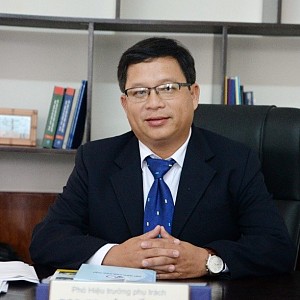
Assoc. Prof. Le Tuan Anh
Thu Dau Mot University
Thu Dau Mot University

PhD. Nguyen Quoc Cuong
Thu Dau Mot University
Thu Dau Mot University

PhD. Doan Ngoc Xuan
Thu Dau Mot University
Thu Dau Mot University

PhD. Nguyen Khoa Truong An
Thu Dau Mot University
Thu Dau Mot University

Assoc. Prof. Nguyen Thanh Binh
Thu Dau Mot University
Thu Dau Mot University

PhD. Le Thi Thuy Dung
Thu Dau Mot University
Thu Dau Mot University

PhD. Ngo Hong Diep
Thu Dau Mot University
Thu Dau Mot University

PhD. Nguyen Duc Dat Duc
Ho Chi Minh City University of Industry and Trade
Ho Chi Minh City University of Industry and Trade

Assoc. Prof. Nguyen Van Duc
Animal Husbandry Association of Vietnam
Animal Husbandry Association of Vietnam

PhD. Nguyen Thi Nhat Hang
Department of Education and Training of Binh Duong Province
Department of Education and Training of Binh Duong Province

PhD. Nguyen Thi Cam Le
Vietnam Aviation Academy
Vietnam Aviation Academy

PhD. Trần Hạnh Minh Phương
Thu Dau Mot University
Thu Dau Mot University

M.A. Pham Van Thinh
Thu Dau Mot University
Thu Dau Mot University

PhD. Nguyen Thi Lien Thuong
Thu Dau Mot University
Thu Dau Mot University
Prof. Le Quang Tri
Can Tho University
Can Tho University
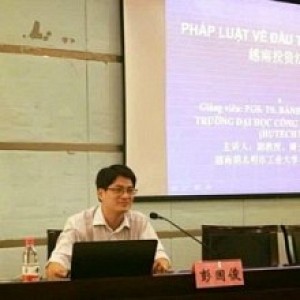
Prof. Banh Quoc Tuan
Thu Dau Mot University
Thu Dau Mot University