
Thu Dau Mot University Journal of Science

Search Papers
4 papers
The administrative merger in Southeast Vietnam has fundamentally reshaped regional governance, spatial configurations, and development priorities, creating urgent requirements for a more integrated approach to science and technology (S&T) human resource development. To assess the implications of this restructuring, the study employs a mixed-methods design that combines institutional diagnostics, comparative policy analysis, and quantitative evaluation of workforce indicators. Empirical data are sourced from national statistical agencies, ministerial datasets, provincial development reports, and international benchmarking studies. The analysis focuses on the S&T workforce within the newly configured administrative units of expanded Ho Chi Minh City, Dong Nai, and Tay Ninh, examining competency structures, spatial distribution, coordination mechanisms, and post-merger system dynamics. The findings reveal significant disparities in qualification profiles, weak cross-provincial linkages in training and research, and limited alignment between workforce planning and emergent regional development trajectories. Despite these constraints, the merger presents opportunities to consolidate training capacity, strengthen innovation networks, and enhance talent mobility. The study argues for a coordinated regional S&T human resource strategy supported by institutional harmonization, a functionally differentiated training system, AI-enabled workforce planning tools, and expanded regional–national–international cooperation to advance a knowledge-based, climate-adaptive development pathway for Southeast Vietnam.
THE IMPACT RANKINGS AND SUSTAINABLE DEVELOPMENT GOALS OF UNIVERSITIES IN VIETNAM
Nguyen Thi Mong Ngoc
THE Impact Ranking reflects the impact and contribution of universities around the world, including Vietnam, to the community towards the 17 sustainable development goals of the United Nations. The purpose of this study is to evaluate the ranking results of Vietnamese universities in this ranking and the sustainable development goals that they are pursuing. The results show that from only one Vietnamese university among 467 global universities ranked in 2019, there are now 13 Vietnamese universities out of 1,936 global universities in the rankings. In addition to the mandatory SDG17, most Vietnamese universities mainly focus on the 8 SDGs related to economy, health, education, peace, equality and community (SDG1, SDG3, SDG4, SDG5, SDG8, SDG10, SDG11, SDG16). However, few universities focus on the goals related to poverty and environmental resources (SDG2, SDG6, SDG7, SDG9, SDG12, SDG13, SDG14, SDG15). This situation poses great responsibility and challenge for Vietnamese universities in accompanying the world in realizing the goal of sustainable development. This study is a reference resource for Vietnamese universities to identify sustainable development goals that should be prioritized in their short-term and long-term plans when participating in THE Impact rankings, in order to contribute to building a peaceful, just and prosperous society
THE INFLUENCE OF RELIGION ON THE SUSTAINABLE DEVELOPMENT OF LOCAL ETHNIC MINORITIES IN THE SOUTHERN CENTRAL HIGHLANDS TODAY
Huynh Ngoc Thu, Le Thi My Hà
Sustainable development is a crucial issue that has been particularly emphasized by the Party and the Government of Vietnam, especially in areas with a large population of ethnic minorities. The Southern Central Highlands is currently home to nearly 50 ethnic groups, among which local ethnic minorities such as the Ê Đê, K’ho, and M’nông are striving to develop their economy, culture, and society sustainably. However, this development process faces numerous challenges from both objective and subjective factors, including natural conditions, government development policies, ethnic psychology, and religious factors. At present, Catholicism and Protestantism are the two main religions within the ethnic minority communities of the Southern Central Highlands. Introduced to the region from the late 19th to early 20th century, these two religions flourished in the second half of the 20th century and have become major elements in the spiritual lives of the communities. Religion has had and continues to have significant impacts on the economic, cultural, and social development of local ethnic minorities, contributing positively to the process of sustainable development. This article uses data collected from the community through participant observation, in-depth interviews, and survey questionnaires to analyze the impact of religion on the economic, cultural, environmental, and social aspects of local ethnic minorities in the South Central Highlands in the context of sustainable development.
ASSESSING THE SUSTAINABILITY OF URBAN LAND USE IN PLEIKU CITY, GIA LAI PROVINCE
Nguyen Ninh Hai, Nguyen Thi Lan Thuong, Nguyen Thi Ly, Nguyen Thi Ha, Truong Quoc Minh
Sustainability in land use plays an important role in the urbanization process toward achieving the goals of the 2030 Agenda for Sustainable Development. This study integrates Earth observation data through satellite imagery analysis combined with field surveys to assess the Urban Land Use Efficiency (ULUE) by using the land use efficiency index, estimates the relationship between land use, population growth, and the urbanization process in Thang Loi ward over a 20-year period. The findings reveal inefficient urban land use, where the expansion rate of built-up areas exceeds the population growth rate in the studied area. From 2002 to 2022, the population and built-up area increased by 339% and 460%, respectively. In most of the expanding areas, there is widespread hoarding and fragmentation of land use, with numerous plots of land being vacant or underutilized for many years due to lack of control. Therefore, to improve land productivity and ensure sustainable urban growth, the local government should consider improving the Urban Land Use Efficiency Index.
Publication Information
Publisher
Thu Dau Mot University, Viet Nam
Editor-in-Chief

Assoc. Prof. Nguyen Van Hiep
Thu Dau Mot University
Thu Dau Mot University
Editorial Board
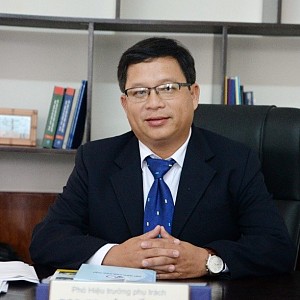
Assoc. Prof. Le Tuan Anh
Thu Dau Mot University
Thu Dau Mot University

PhD. Nguyen Quoc Cuong
Thu Dau Mot University
Thu Dau Mot University

PhD. Doan Ngoc Xuan
Thu Dau Mot University
Thu Dau Mot University

PhD. Nguyen Khoa Truong An
Thu Dau Mot University
Thu Dau Mot University

Assoc. Prof. Nguyen Thanh Binh
Thu Dau Mot University
Thu Dau Mot University

PhD. Le Thi Thuy Dung
Thu Dau Mot University
Thu Dau Mot University

PhD. Ngo Hong Diep
Thu Dau Mot University
Thu Dau Mot University

PhD. Nguyen Duc Dat Duc
Ho Chi Minh City University of Industry and Trade
Ho Chi Minh City University of Industry and Trade

Assoc. Prof. Nguyen Van Duc
Animal Husbandry Association of Vietnam
Animal Husbandry Association of Vietnam

PhD. Nguyen Thi Nhat Hang
Department of Education and Training of Binh Duong Province
Department of Education and Training of Binh Duong Province

PhD. Nguyen Thi Cam Le
Vietnam Aviation Academy
Vietnam Aviation Academy

PhD. Trần Hạnh Minh Phương
Thu Dau Mot University
Thu Dau Mot University
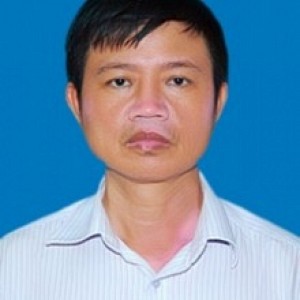
M.A. Pham Van Thinh
Thu Dau Mot University
Thu Dau Mot University

PhD. Nguyen Thi Lien Thuong
Thu Dau Mot University
Thu Dau Mot University
Prof. Le Quang Tri
Can Tho University
Can Tho University
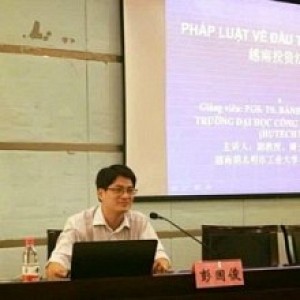
Prof. Banh Quoc Tuan
Thu Dau Mot University
Thu Dau Mot University