
Thu Dau Mot University Journal of Science

Search Papers
5 papers
With the rapid advancement of AI, its integration into EFL education has become increasingly prominent. This small-scale study provides insights from a Taiwanese higher education context, drawing on both EFL teachers’ and students’ perspectives. Guided by Cognitive Load Theory (CLT), the study examines how AI is used to support language learning tasks, involving varying levels of cognitive load, and explores its potential role in managing learners’ cognitive processing demands. A mixed-methods approach was employed, with quantitative and qualitative data collected through questionnaires. The study also explores patterns of AI usage, perceptions of its effectiveness, challenges encountered, and attitudes toward its future role in English education.
The findings indicate that AI has become a widely used support tool in EFL learning. Students primarily use AI tools, such as ChatGPT and Grammarly, for writing, information searching, and grammar support, i.e., tasks that typically impose high intrinsic cognitive load on EFL learners. In contrast, teachers mainly employ AI for lesson preparation, material design, and efficiency enhancement, thereby reducing extraneous cognitive load. Although both groups hold positive attitudes toward AI integration, teachers demonstrate a more cautious approach due to concerns regarding usability, pedagogical alignment, data privacy, and potential students’ overreliance. From a CLT perspective, the results suggest that while AI can reduce extraneous cognitive load and provide procedural support, excessive dependence on AI may limit learners’ germane cognitive load by reducing their active engagement in language processing. Students largely agree that AI cannot replace human teachers, particularly in areas involving emotional support, interaction, and guidance. The data indicate that effective AI integration requires institutional support, professional training, and the development of digital literacy to ensure a balanced, human-centered approach to AI-enhanced EFL education.
AI INTEGRATION IN TEACHING AND LEARNING: FACULTY TRAINING FOR THE USE OF ARTIFICIAL INTELLIGENCE IN HIGHER EDUCATION IN VIETNAM
Le Ho Van Phang, Luu Thao Ly, Giang Gia Bao, Vu Hoang Long, Nguyen Tam Nhu Ngoc
This study examines the relationships between Training Quality (TQ), Institutional Support (IS), Faculty Readiness (FR), and Perceived Effectiveness (PE) in the context of artificial intelligence (AI) integration in higher education institutions (HEIs) in Vietnam. Employing Partial Least Squares Structural Equation Modeling (PLS-SEM), data from 418 faculty members from higher education institutions (HEIs) in Vietnam were analyzed to identify key factors influencing the adoption of AI in teaching. The findings reveal that both TQ and IS significantly enhance FR, underscoring the critical importance of comprehensive training programs and institutional resources for preparing faculty to adopt AI. Furthermore, FR has a substantial impact on PE and serves as a mediator between TQ and PE, as well as IS and PE. This highlights the pivotal role of faculty readiness in transforming training and support into perceived improvements in teaching effectiveness. The model demonstrates high predictive relevance for both FR (Q² = 0.55) and PE (Q² = 0.60), suggesting the robustness of the theoretical framework. Despite the study’s limitations, including its focus on Vietnamese HEIs and cross-sectional design, it provides valuable insights for designing effective faculty development and institutional support strategies to facilitate AI integration
Non-English Majors’ Perceptions of Ethical Use and Plagiarism Risks of AI Tools in English Academic Writing: A Study at Thu Dau Mot University
Ho Trung Hau, Le Thi My Duyen, Hoang Doan Gia Han
This study explores non-English major students’ perceptions of the ethical use and plagiarism risks associated with Artificial Intelligence (AI) tools in academic writing at Thu Dau Mot University. As AI technologies become increasingly integrated into higher education, concerns about academic integrity, authorship, and originality have intensified. Using a convergent mixed-methods design, data were collected from 108 students through questionnaires and from six participants via semi-structured interviews. Quantitative findings revealed that a majority of students acknowledged the importance of ethical AI use and expressed support for clearer institutional guidelines and teacher training on responsible AI integration. However, uncertainty persisted regarding the ethical boundaries between legitimate assistance and academic misconduct. Qualitative data reinforced these findings, highlighting students’ awareness of AI’s dual role in enhancing writing skills and posing plagiarism risks, particularly through diminished creativity and loss of personal voice. The study underscores the need for localized policies, updated plagiarism regulations, and pedagogical strategies to guide responsible AI use in EFL writing contexts.
ARTIFICIAL INTELLIGENCE IN EFL TEACHING: TEACHERS’ READINESS AND ADOPTION INTENTIONS IN THU DAU MOT CITY, BINH DUONG PROVINCE
Tran Thi Le Thu
AI is transforming English as a Foreign Language (EFL) education by facilitating personalized learning and intelligent tutoring globally. This study examines the readiness and intentions of educators in Thu Dau Mot City, Vietnam, to adopt AI in their EFL classrooms. Through surveys and interviews with 102 teachers and lecturers, results show a high perceived usefulness and intention to integrate AI (M = 4.10). However, challenges remain with moderate ease of use (M = 3.92), low confidence in AI tools (M = 3.68), and limited institutional support (M = 3.45). Qualitative insights indicate a need for systematic training and collaborative environments. The findings emphasize that successful AI adoption relies on institutional investment in training and infrastructure. Without this support, the gap between enthusiasm and actual implementation may hinder AI's transformative potential. Policymakers and educational leaders need to create structured frameworks for effective AI integration in EFL classrooms.
This article examines the role of social networks and informal institutions in facilitating the resettlement and socio-economic integration of Vietnamese returnees from Cambodia in the Tri An Lake region, Dong Nai Province. In the context of statelessness and the absence of legal identification, these returnees faced significant barriers in accessing official support from local authorities. Under such circumstances, kinship-based networks, fellow migrant connections, and local community ties—together with informal support mechanisms —played a pivotal role in providing essential resources such as shelter, livelihood opportunities, informal credit, and emotional support. Drawing on oral history interviews with Vietnamese returnees who have resettled around Tri An Lake since the late 1980s, the study reveals that these social connections and informal institutions helped individuals navigate initial crises and contributed significantly to their long-term stability and integration.
Publication Information
Publisher
Thu Dau Mot University, Viet Nam
Editor-in-Chief

Assoc. Prof. Nguyen Van Hiep
Thu Dau Mot University
Thu Dau Mot University
Editorial Board
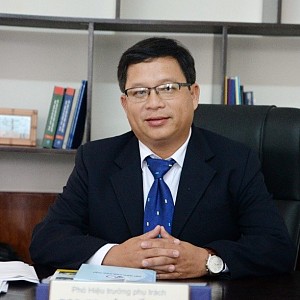
Assoc. Prof. Le Tuan Anh
Thu Dau Mot University
Thu Dau Mot University

PhD. Nguyen Quoc Cuong
Thu Dau Mot University
Thu Dau Mot University

PhD. Doan Ngoc Xuan
Thu Dau Mot University
Thu Dau Mot University

PhD. Nguyen Khoa Truong An
Thu Dau Mot University
Thu Dau Mot University

Assoc. Prof. Nguyen Thanh Binh
Thu Dau Mot University
Thu Dau Mot University

PhD. Le Thi Thuy Dung
Thu Dau Mot University
Thu Dau Mot University

PhD. Ngo Hong Diep
Thu Dau Mot University
Thu Dau Mot University

PhD. Nguyen Duc Dat Duc
Ho Chi Minh City University of Industry and Trade
Ho Chi Minh City University of Industry and Trade

Assoc. Prof. Nguyen Van Duc
Animal Husbandry Association of Vietnam
Animal Husbandry Association of Vietnam

PhD. Nguyen Thi Nhat Hang
Department of Education and Training of Binh Duong Province
Department of Education and Training of Binh Duong Province

PhD. Nguyen Thi Cam Le
Vietnam Aviation Academy
Vietnam Aviation Academy

PhD. Trần Hạnh Minh Phương
Thu Dau Mot University
Thu Dau Mot University

M.A. Pham Van Thinh
Thu Dau Mot University
Thu Dau Mot University

PhD. Nguyen Thi Lien Thuong
Thu Dau Mot University
Thu Dau Mot University

Prof. Le Quang Tri
Can Tho University
Can Tho University
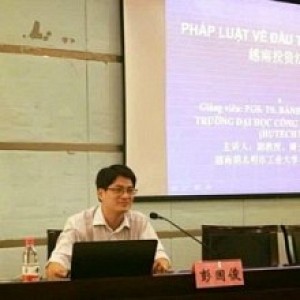
Prof. Banh Quoc Tuan
Thu Dau Mot University
Thu Dau Mot University