
Thu Dau Mot University Journal of Science

Search Papers
2 papers
THE IMPACT OF CHATGPT USE ON STUDENTS’ COGNITIVE AND BEHAVIORAL ENGAGEMENT IN HIGH SCHOOL PHYSICS LEARNING: A CASE STUDY AT VO MINH DUC HIGH SCHOOL
Nguyen Phuong Duy Anh
Abstract
This study examines how ChatGPT influences high school students’ cognitive and behavioral engagement in Physics learning, drawing on survey data from 251 students at Vo Minh Duc High School in Ho Chi Minh City. Although generative AI is increasingly adopted in education, little is known about how Vietnamese students use ChatGPT in a cognitively demanding subject like Physics-representing a notable research gapin a cognitively demanding subject like Physics, which represents a notable research gap. Using a mixed-methods design, the study explores how students employ ChatGPT, how they perceive its usefulness and reliability, and how its use shapes learning behaviors. Findings indicate that students commonly use ChatGPT as a self-study aid and perceive it as helpful for understanding complex concepts, yet many express concerns about accuracy and show signs of overreliance when using the tool without guidance. The study highlights the dual impact of ChatGPT-supporting learning while potentially reducing independent thinking-and contributes evidence potentially reducing independent thinking and contributes evidence to inform AI literacy development, teacher training, and pedagogical frameworks for responsible integration of generative AI in secondary education.
AI INTEGRATION IN TEACHING AND LEARNING: FACULTY TRAINING FOR THE USE OF ARTIFICIAL INTELLIGENCE IN HIGHER EDUCATION IN VIETNAM
Le Ho Van Phang, Luu Thao Ly, Giang Gia Bao, Vu Hoang Long, Nguyen Tam Nhu Ngoc
This study examines the relationships between Training Quality (TQ), Institutional Support (IS), Faculty Readiness (FR), and Perceived Effectiveness (PE) in the context of artificial intelligence (AI) integration in higher education institutions (HEIs) in Vietnam. Employing Partial Least Squares Structural Equation Modeling (PLS-SEM), data from 418 faculty members from higher education institutions (HEIs) in Vietnam were analyzed to identify key factors influencing the adoption of AI in teaching. The findings reveal that both TQ and IS significantly enhance FR, underscoring the critical importance of comprehensive training programs and institutional resources for preparing faculty to adopt AI. Furthermore, FR has a substantial impact on PE and serves as a mediator between TQ and PE, as well as IS and PE. This highlights the pivotal role of faculty readiness in transforming training and support into perceived improvements in teaching effectiveness. The model demonstrates high predictive relevance for both FR (Q² = 0.55) and PE (Q² = 0.60), suggesting the robustness of the theoretical framework. Despite the study’s limitations, including its focus on Vietnamese HEIs and cross-sectional design, it provides valuable insights for designing effective faculty development and institutional support strategies to facilitate AI integration
Publication Information
Publisher
Thu Dau Mot University, Viet Nam
Editor-in-Chief

Assoc. Prof. Nguyen Van Hiep
Thu Dau Mot University
Thu Dau Mot University
Editorial Board
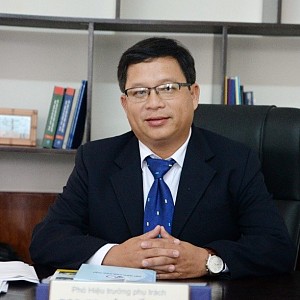
Assoc. Prof. Le Tuan Anh
Thu Dau Mot University
Thu Dau Mot University

PhD. Nguyen Quoc Cuong
Thu Dau Mot University
Thu Dau Mot University

PhD. Doan Ngoc Xuan
Thu Dau Mot University
Thu Dau Mot University

PhD. Nguyen Khoa Truong An
Thu Dau Mot University
Thu Dau Mot University

Assoc. Prof. Nguyen Thanh Binh
Thu Dau Mot University
Thu Dau Mot University

PhD. Le Thi Thuy Dung
Thu Dau Mot University
Thu Dau Mot University

PhD. Ngo Hong Diep
Thu Dau Mot University
Thu Dau Mot University

PhD. Nguyen Duc Dat Duc
Ho Chi Minh City University of Industry and Trade
Ho Chi Minh City University of Industry and Trade

Assoc. Prof. Nguyen Van Duc
Animal Husbandry Association of Vietnam
Animal Husbandry Association of Vietnam

PhD. Nguyen Thi Nhat Hang
Department of Education and Training of Binh Duong Province
Department of Education and Training of Binh Duong Province

PhD. Nguyen Thi Cam Le
Vietnam Aviation Academy
Vietnam Aviation Academy

PhD. Trần Hạnh Minh Phương
Thu Dau Mot University
Thu Dau Mot University
M.A. Pham Van Thinh
Thu Dau Mot University
Thu Dau Mot University

PhD. Nguyen Thi Lien Thuong
Thu Dau Mot University
Thu Dau Mot University
Prof. Le Quang Tri
Can Tho University
Can Tho University
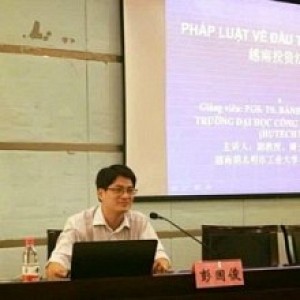
Prof. Banh Quoc Tuan
Thu Dau Mot University
Thu Dau Mot University