
Thu Dau Mot University Journal of Science

Search Papers
4 papers
SENIOR UNDERGRADUATE STUDENTS' CHATGPT EXPERIENCE AND PERSPECTIVES DURING ACADEMIC WRITING: A CASE STUDY AT FACULTY OF FOREIGN LANGUAGES, THU DAU MOT UNIVERSITY
Nguyen Hoang Minh Duc
This study examines the use of ChatGPT in students’ report-writing process in the course “Mini-project: British and American work styles”. The participants were 105 senior English majors at Thu Daub Mot University in Vietnam in the second semester of the 2024-2025 school year. This study investigates how students used ChatGPT while writing their reports and their perceptions of its use. A questionnaire containing both closed and open-ended items was administered at the end of the course to collect students’ responses. The results showed that the majority of students used ChatGPT during their writing process. They believed ChatGPT should be integrated into academic writing courses and intended to continue using it in future academic tasks. However, they indicated that more specific university guidelines on the use of AI tools should be provided.
Non-English Majors’ Perceptions of Ethical Use and Plagiarism Risks of AI Tools in English Academic Writing: A Study at Thu Dau Mot University
Ho Trung Hau, Le Thi My Duyen, Hoang Doan Gia Han
This study explores non-English major students’ perceptions of the ethical use and plagiarism risks associated with Artificial Intelligence (AI) tools in academic writing at Thu Dau Mot University. As AI technologies become increasingly integrated into higher education, concerns about academic integrity, authorship, and originality have intensified. Using a convergent mixed-methods design, data were collected from 108 students through questionnaires and from six participants via semi-structured interviews. Quantitative findings revealed that a majority of students acknowledged the importance of ethical AI use and expressed support for clearer institutional guidelines and teacher training on responsible AI integration. However, uncertainty persisted regarding the ethical boundaries between legitimate assistance and academic misconduct. Qualitative data reinforced these findings, highlighting students’ awareness of AI’s dual role in enhancing writing skills and posing plagiarism risks, particularly through diminished creativity and loss of personal voice. The study underscores the need for localized policies, updated plagiarism regulations, and pedagogical strategies to guide responsible AI use in EFL writing contexts.
The blended learning: English majors’ perception of its effects on their writing skills
Huỳnh Thị Bích Phượng
ABSTRACT
With the ever-increasing development of technology, online teaching is more readily accepted as a viable component in teaching and learning, and blended learning, the combining of online and face-to-face learning, is becoming commonplace in many higher education institutions. Definitely, challenges cannot be denied; however, it has been suggested and deployed globally including Vietnam. To some extent, both teachers and students present their positive points of view on this learning approach. However, there are a huge number of students expressing their lack of understanding the blended learning, which negatively affects their attitudes towards deployment of this learning approach as well as particular reference to motivation and interest. This paper is to assess the English majors’ perceptions on blended learning environment at tertiary level, which especially affects their learning the writing skills.
Results of the study are absolutely helpful for the author to understand the students’ perceptions of the effects on the blended learning; then, she can give some suggestions to enhance the learning of writing skills in the light of blended learning.
Key word: Blended learning, academic writing, perception
English language Errors in Academic writing: An analysis of English research papers of Thu Dau Mot University Journal of Science
Assistant. Nguyen Thi Man
This research aims to describe English language errors in the scientific papers. The research data consists of 104 scientific articles that authors sent to Journal of Thu Dau Mot University. The quantitative method was applied in the form of frequency charts for each category of surface strategy taxonomy and comparative analysis. Based on the analysis theory of grammatical errors, all of the errors in these articles were identified and classified into different categorizations. The findings of the study showed that the authors’ writings were committed three main error groups: Lexical errors are the highest with 281 (49%); the number of Syntactic errors are ranked the second with 222 (39%); Morphological errors are the lowest with 69 (12%). On the basis of these results it is figured out that the authors still have difficulties in writing a research papers in English because they are not English major. Moreover the grammar of English is known as their foreign language. Another reason that the writer made errors is uninterested in organization of their papers. From the study findings above, the researcher suggests some implications to help authors improve their academic writing and meet English international standard.
Publication Information
Publisher
Thu Dau Mot University, Viet Nam
Editor-in-Chief

Assoc. Prof. Nguyen Van Hiep
Thu Dau Mot University
Thu Dau Mot University
Editorial Board
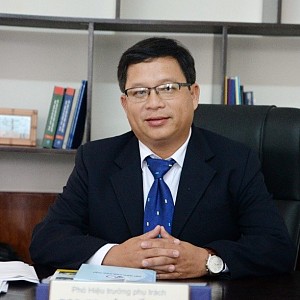
Assoc. Prof. Le Tuan Anh
Thu Dau Mot University
Thu Dau Mot University

PhD. Nguyen Quoc Cuong
Thu Dau Mot University
Thu Dau Mot University

PhD. Doan Ngoc Xuan
Thu Dau Mot University
Thu Dau Mot University

PhD. Nguyen Khoa Truong An
Thu Dau Mot University
Thu Dau Mot University

Assoc. Prof. Nguyen Thanh Binh
Thu Dau Mot University
Thu Dau Mot University

PhD. Le Thi Thuy Dung
Thu Dau Mot University
Thu Dau Mot University

PhD. Ngo Hong Diep
Thu Dau Mot University
Thu Dau Mot University

PhD. Nguyen Duc Dat Duc
Ho Chi Minh City University of Industry and Trade
Ho Chi Minh City University of Industry and Trade

Assoc. Prof. Nguyen Van Duc
Animal Husbandry Association of Vietnam
Animal Husbandry Association of Vietnam

PhD. Nguyen Thi Nhat Hang
Department of Education and Training of Binh Duong Province
Department of Education and Training of Binh Duong Province

PhD. Nguyen Thi Cam Le
Vietnam Aviation Academy
Vietnam Aviation Academy

PhD. Trần Hạnh Minh Phương
Thu Dau Mot University
Thu Dau Mot University

M.A. Pham Van Thinh
Thu Dau Mot University
Thu Dau Mot University

PhD. Nguyen Thi Lien Thuong
Thu Dau Mot University
Thu Dau Mot University

Prof. Le Quang Tri
Can Tho University
Can Tho University
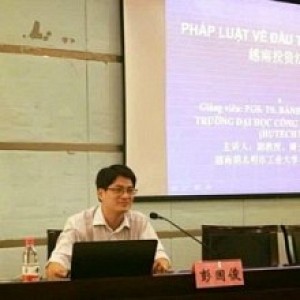
Prof. Banh Quoc Tuan
Thu Dau Mot University
Thu Dau Mot University