
Thu Dau Mot University Journal of Science

Search Papers
28 papers
Comparison of simple Maximum Power Point Tracking algoritms and simulation by PSIM for a standalone photovoltaic system
Pham Hong Thanh
Traditional fossil energy sources are increasingly exhausted, leading to the need for mankind to exploit alternative energy sources; and solar energy can be viewed as infinite. Solar photovoltaic and its applications are increasingly widely studied. However, due to its nonlinearity and unstable nature, high technology is required to achieve good conversion efficiency. One of the techniques to optimize solar cell efficiency is to use the Maximum Power Point Tracking algorithm (MPPT) and P&O is a relatively easy algorithm to implement. This article will present some problems about photovoltaic cells, power converters in solar power systems and using PSIM software to simulate an independent solar system with several harvesting solutions for solar power and compare the efficiency of them.
Bioactivities of extracts and phytochemicals of Indigofera aspalathoides Vahl ex DC.
Authinarayanan Rajesh, Saravanan Vievekanandarajah Sathasivampillai, Pholtan Rajeev Sebastian Rajamanoharan
Indigofera aspalathoides Vahl ex DC. belongs to the Fabaceae family. I. aspalathoides is applied to heal tumors, inflammations, diabetes, leprosy, and kidney illnesses in traditional medicines. Compounds including kaempferol, kaempferol 5-O-β-D-glucopyranoside, 5,4'-dihydroxy 6,8-dimethoxy 7-O-rhamnosyl flavone, indigocarpan, and mucronulatol have isolated from this plant species. Hitherto, there is no comprehensive review available regarding the reported bioactivities of I. aspalathoides. Thus, this article goals to analyze, summarize and document the published bioactivities-related publications. Electronic databases the Web of Science, Scopus, ScienceDirect, and PubMed used to find relevant publications from 1900 to December 2020. Thus far, only in vivo and in vitro scientific evidence levels of bioactivities are available. I. aspalathoides holds such as anti-inflammatory, anticancer, antihepatotoxic, anti-arthritic, immunomodulatory, and antidiabetic properties. Overall, immunomodulatory, anti-inflammatory, and anticancer compounds have been isolated from this plant species Therefore, additional bioactivity and phytochemical-related researches would need to perform to generate more scientific evidence for other applications. This work will be useful for further bioactivity and phytochemical studies using this plant species.
Simulating 3r robot dynamics using imported cad in Maplesim
Nguyen Van Tan
With the development of information technology, many applications of robots are increasingly being applied to support research, learning, and teaching. This paper mainly investigates the modeling and simulation of a robotic arm with 3 degrees of freedom (dofs) for different applications. First, Kinematics and dynamics model of the robot based on the standard Denavit Hartenberg (D-H) modeling method, where the forward kinematics of robot is analyzed and computed to obtain by using the inverse kinematics, and then the solution of the robot dynamics is derived. Second, a CAD model of the robot is designed on CATIA software to convert to MapleSim software to simulation and control. Final, numerical simulation is presented to display results. This work provides a potential basis for the realization of the robotic arm in the industrial, education, and research field, which is of great significance for improving manufacturing efficiency and support teaching and research in the robot field.
Removal of copper (Cu2+) by preparation modified carbon from macadamia shells by chemical agent with H2O2 in wastewater
Đao Minh Trung, Le Nguyen Phuong Anh, Nguyen Thanh Quang, Nguyen Thi Thanh Tram
Macadamia shells were used to prepare modified carbon by chemical agent H2O2 (25%) in 48 hours with coke ratio: H2O2 = 1:10. Modified carbon from Macadamia shells with chemical agent H2O2 has capable of adsorption heavy metal copper (Cu 2+ ) at an assumption concentration is 30ppm in the optimum conditions such as pH = 4, dose is 1.8 g/l, and the processing time is 30 minutes. The result showed that the adsorption ability of the material reached the highest efficiency is 78.33%. This result showed that modified carbon from shells Macadamia by chemical agent H2O2 capable of removing applications on heavy metal copper (Cu2+) in wastewater.
Publication Information
Publisher
Thu Dau Mot University, Viet Nam
Editor-in-Chief

Assoc. Prof. Nguyen Van Hiep
Thu Dau Mot University
Thu Dau Mot University
Editorial Board
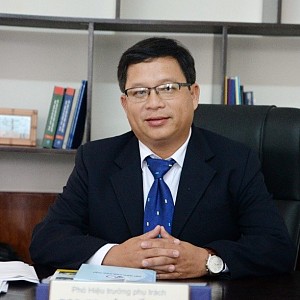
Assoc. Prof. Le Tuan Anh
Thu Dau Mot University
Thu Dau Mot University

PhD. Nguyen Quoc Cuong
Thu Dau Mot University
Thu Dau Mot University

PhD. Doan Ngoc Xuan
Thu Dau Mot University
Thu Dau Mot University

PhD. Nguyen Khoa Truong An
Thu Dau Mot University
Thu Dau Mot University

Assoc. Prof. Nguyen Thanh Binh
Thu Dau Mot University
Thu Dau Mot University

PhD. Le Thi Thuy Dung
Thu Dau Mot University
Thu Dau Mot University

PhD. Ngo Hong Diep
Thu Dau Mot University
Thu Dau Mot University

PhD. Nguyen Duc Dat Duc
Ho Chi Minh City University of Industry and Trade
Ho Chi Minh City University of Industry and Trade

Assoc. Prof. Nguyen Van Duc
Animal Husbandry Association of Vietnam
Animal Husbandry Association of Vietnam

PhD. Nguyen Thi Nhat Hang
Department of Education and Training of Binh Duong Province
Department of Education and Training of Binh Duong Province

PhD. Nguyen Thi Cam Le
Vietnam Aviation Academy
Vietnam Aviation Academy

PhD. Trần Hạnh Minh Phương
Thu Dau Mot University
Thu Dau Mot University
M.A. Pham Van Thinh
Thu Dau Mot University
Thu Dau Mot University

PhD. Nguyen Thi Lien Thuong
Thu Dau Mot University
Thu Dau Mot University
Prof. Le Quang Tri
Can Tho University
Can Tho University
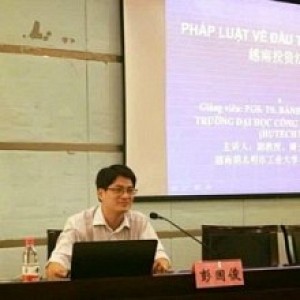
Prof. Banh Quoc Tuan
Thu Dau Mot University
Thu Dau Mot University