
Thu Dau Mot University Journal of Science

Search Papers
9 papers
With the rapid advancement of AI, its integration into EFL education has become increasingly prominent. This small-scale study provides insights from a Taiwanese higher education context, drawing on both EFL teachers’ and students’ perspectives. Guided by Cognitive Load Theory (CLT), the study examines how AI is used to support language learning tasks, involving varying levels of cognitive load, and explores its potential role in managing learners’ cognitive processing demands. A mixed-methods approach was employed, with quantitative and qualitative data collected through questionnaires. The study also explores patterns of AI usage, perceptions of its effectiveness, challenges encountered, and attitudes toward its future role in English education.
The findings indicate that AI has become a widely used support tool in EFL learning. Students primarily use AI tools, such as ChatGPT and Grammarly, for writing, information searching, and grammar support, i.e., tasks that typically impose high intrinsic cognitive load on EFL learners. In contrast, teachers mainly employ AI for lesson preparation, material design, and efficiency enhancement, thereby reducing extraneous cognitive load. Although both groups hold positive attitudes toward AI integration, teachers demonstrate a more cautious approach due to concerns regarding usability, pedagogical alignment, data privacy, and potential students’ overreliance. From a CLT perspective, the results suggest that while AI can reduce extraneous cognitive load and provide procedural support, excessive dependence on AI may limit learners’ germane cognitive load by reducing their active engagement in language processing. Students largely agree that AI cannot replace human teachers, particularly in areas involving emotional support, interaction, and guidance. The data indicate that effective AI integration requires institutional support, professional training, and the development of digital literacy to ensure a balanced, human-centered approach to AI-enhanced EFL education.
MODALITY IN NEWS DISCOURSE ON NATURAL DISASTERS: A STUDY OF THE UNITED KINGDOM PRESS
Phan Tuan Ly, Hoang Ngoc Thanh Truc, Kieu Minh Khanh
This article investigates modality in UK news discourse on natural disasters, drawing on a corpus of 50 disaster-related news reports collected from five UK online newspapers. The corpus comprises 23,804 words, with an average length of 476 words per report. Methodologically, the study adopts a mixed-methods design, integrating qualitative descriptive analysis to identify, categorize, and interpret modal expressions in context with quantitative analysis to determine the frequency and distribution of modal resources across the corpus. All texts were annotated and statistically processed using UAM CorpusTool 6.2. The findings reveal that, out of 386 modal tokens, verbal modality overwhelmingly predominates (328 tokens; 85%), while nonverbal modality is comparatively limited (15%), suggesting hard-news reporting favors more determinate, less overtly subjective forms. Modal auxiliaries are the primary resource, led by will (70), can (50), could (43), and would (36). Adjectival modality is diverse but less frequent overall (28 items), with likely (12) most common, followed by possible (9) and unable/sure (7 each). Adverbial modality is rare, with only definitely (2) and maybe/possibly/perhaps (1 each). This paper advances applied linguistics theory and offers practical insights for improving journalistic communication in Vietnam.
This mixed-methods study examines how fourth-year English majors at Thu Dau Mot University engage in Zalo-based classroom discussions. Using a convergent parallel design, data were collected through a questionnaire (N = 112) and semi-structured interviews (N = 8) to explore behavioral, cognitive, and emotional dimensions of engagement. Findings reveal that Zalo is primarily used for task coordination and passive monitoring, with limited proactive discussion. Students value its functions for planning and language accuracy but perceive discussions as low in intellectual depth. Emotionally, Zalo fosters social connection and comfort in interacting with peers and lecturers but also introduces pressure to keep up and reluctance to express dissent. The study highlights Zalo’s dual role as a facilitator of convenience and a constraint on deeper learning, suggesting the need for intentional instructional design to promote critical thinking and inclusive dialogue.
Undergraduate research is widely recognized as a meaningful practice that develops students’ critical thinking, problem‑solving, and science identity, yet student engagement remains uneven due to multiple factors. To address this issue, this mixed-methods study examines undergraduate students’ engagement in research at a Vietnamese university, focusing on their attitudes, perceived support, and intentions to participate. Survey data (N = 164) and interviews (N = 8) reveal a clear divide between students’ positive views of research outcomes and their ambivalence toward the research process. Although students believe lecturers are supportive, they report low comfort in seeking help, limited peer encouragement, and little awareness of institutional research policies. Students express moderate intention to conduct a research project but show strong reluctance toward presenting or publishing their work. The qualitative findings highlight psychological barriers, unclear pathways, and an outcome-oriented mindset. The study argues that current support structures are passive and insufficient. Institutions should implement more visible, structured mentorship to strengthen students’ confidence and foster a more active undergraduate research culture.
THE IMPACT OF CHATGPT USE ON STUDENTS’ COGNITIVE AND BEHAVIORAL ENGAGEMENT IN HIGH SCHOOL PHYSICS LEARNING: A CASE STUDY AT VO MINH DUC HIGH SCHOOL
Nguyen Phuong Duy Anh
Abstract
This study examines how ChatGPT influences high school students’ cognitive and behavioral engagement in Physics learning, drawing on survey data from 251 students at Vo Minh Duc High School in Ho Chi Minh City. Although generative AI is increasingly adopted in education, little is known about how Vietnamese students use ChatGPT in a cognitively demanding subject like Physics-representing a notable research gapin a cognitively demanding subject like Physics, which represents a notable research gap. Using a mixed-methods design, the study explores how students employ ChatGPT, how they perceive its usefulness and reliability, and how its use shapes learning behaviors. Findings indicate that students commonly use ChatGPT as a self-study aid and perceive it as helpful for understanding complex concepts, yet many express concerns about accuracy and show signs of overreliance when using the tool without guidance. The study highlights the dual impact of ChatGPT-supporting learning while potentially reducing independent thinking-and contributes evidence potentially reducing independent thinking and contributes evidence to inform AI literacy development, teacher training, and pedagogical frameworks for responsible integration of generative AI in secondary education.
The administrative merger in Southeast Vietnam has fundamentally reshaped regional governance, spatial configurations, and development priorities, creating urgent requirements for a more integrated approach to science and technology (S&T) human resource development. To assess the implications of this restructuring, the study employs a mixed-methods design that combines institutional diagnostics, comparative policy analysis, and quantitative evaluation of workforce indicators. Empirical data are sourced from national statistical agencies, ministerial datasets, provincial development reports, and international benchmarking studies. The analysis focuses on the S&T workforce within the newly configured administrative units of expanded Ho Chi Minh City, Dong Nai, and Tay Ninh, examining competency structures, spatial distribution, coordination mechanisms, and post-merger system dynamics. The findings reveal significant disparities in qualification profiles, weak cross-provincial linkages in training and research, and limited alignment between workforce planning and emergent regional development trajectories. Despite these constraints, the merger presents opportunities to consolidate training capacity, strengthen innovation networks, and enhance talent mobility. The study argues for a coordinated regional S&T human resource strategy supported by institutional harmonization, a functionally differentiated training system, AI-enabled workforce planning tools, and expanded regional–national–international cooperation to advance a knowledge-based, climate-adaptive development pathway for Southeast Vietnam.
Non-English Majors’ Perceptions of Ethical Use and Plagiarism Risks of AI Tools in English Academic Writing: A Study at Thu Dau Mot University
Ho Trung Hau, Le Thi My Duyen, Hoang Doan Gia Han
This study explores non-English major students’ perceptions of the ethical use and plagiarism risks associated with Artificial Intelligence (AI) tools in academic writing at Thu Dau Mot University. As AI technologies become increasingly integrated into higher education, concerns about academic integrity, authorship, and originality have intensified. Using a convergent mixed-methods design, data were collected from 108 students through questionnaires and from six participants via semi-structured interviews. Quantitative findings revealed that a majority of students acknowledged the importance of ethical AI use and expressed support for clearer institutional guidelines and teacher training on responsible AI integration. However, uncertainty persisted regarding the ethical boundaries between legitimate assistance and academic misconduct. Qualitative data reinforced these findings, highlighting students’ awareness of AI’s dual role in enhancing writing skills and posing plagiarism risks, particularly through diminished creativity and loss of personal voice. The study underscores the need for localized policies, updated plagiarism regulations, and pedagogical strategies to guide responsible AI use in EFL writing contexts.
OVERCOMING BARRIERS IN ENGLISH COMMUNICATION: INSIGHTS FROM NON-ENGLISH MAJORS AT THU DAU MOT UNIVERSITY
Nguyễn Thị Thanh Thương, Hồ Thị Trà My, Lê Đào Minh Thư, Hồ Trung Hậu
Effective English communication remains a significant challenge for non-English major students at many Vietnamese universities, often hindering their academic and professional development. This study explores the key difficulties faced by non-English majors at Thu Dau Mot University in English communication and their engagement in classroom speaking activities. Using a mixed-methods approach, the study collected data from 100 students through questionnaires and interviews.
The findings reveal four primary challenges: limited vocabulary, pronunciation difficulties, overreliance on the native language, and lack of confidence. These issues not only affect students’ ability to express themselves in English but also reduce their participation in classroom activities.
Despite these obstacles, the study found that active engagement in speaking activities positively impacts students’ learning outcomes, highlighting the importance of supportive and interactive teaching methods. Engagement varied, with students demonstrating greater participation in structured activities than in spontaneous speaking tasks.
Based on the findings, the study provides recommendations for fostering a more engaging and effective learning environment.
GROUP-WORK ACTIVITIES FOR NON-ENGLISH MAJORED STUDENTS TO PROMOTE SPEAKING SKILLS IN EFL CLASSROOMS AT DONG NAI TECHNOLOGY UNIVERSITY
Trinh Vu Thanh Tuyen, Le Thi Hong Tuyen, Nguyen Anh Thu, Tran Nhat Truong
English language proficiency is crucial for academic and professional success, with effective communication skills playing a pivotal role. Collaborative teaching methods, particularly group work, can significantly enhance students' creativity, evaluation, synthesis, analysis, and comparison, as well as problem-solving, essential for developing collaborative abilities. Furthermore, non-English major students often struggle to develop their speaking skills due to limited practice opportunities. This study addresses this challenge by implementing group-work activities in an English as a Foreign Language (EFL) classroom. A mixed-methods approach was used to gather data including quantitative data collected through a questionnaire administered to 71 non-major students at Dong Nai Technology University and qualitative data came from semi-structured interviews. The results showed that group work significantly improved students' fluency, coherence, and confidence. Students reported increased motivation and engagement in speaking activities. These findings suggest that group-work activities effectively enhance speaking skills for non-English major students.
Publication Information
Publisher
Thu Dau Mot University, Viet Nam
Editor-in-Chief

Assoc. Prof. Nguyen Van Hiep
Thu Dau Mot University
Thu Dau Mot University
Editorial Board
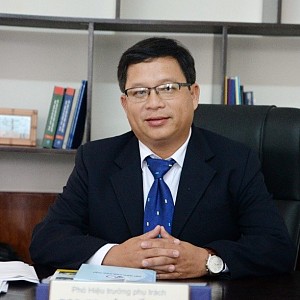
Assoc. Prof. Le Tuan Anh
Thu Dau Mot University
Thu Dau Mot University

PhD. Nguyen Quoc Cuong
Thu Dau Mot University
Thu Dau Mot University

PhD. Doan Ngoc Xuan
Thu Dau Mot University
Thu Dau Mot University

PhD. Nguyen Khoa Truong An
Thu Dau Mot University
Thu Dau Mot University

Assoc. Prof. Nguyen Thanh Binh
Thu Dau Mot University
Thu Dau Mot University

PhD. Le Thi Thuy Dung
Thu Dau Mot University
Thu Dau Mot University

PhD. Ngo Hong Diep
Thu Dau Mot University
Thu Dau Mot University

PhD. Nguyen Duc Dat Duc
Ho Chi Minh City University of Industry and Trade
Ho Chi Minh City University of Industry and Trade

Assoc. Prof. Nguyen Van Duc
Animal Husbandry Association of Vietnam
Animal Husbandry Association of Vietnam

PhD. Nguyen Thi Nhat Hang
Department of Education and Training of Binh Duong Province
Department of Education and Training of Binh Duong Province

PhD. Nguyen Thi Cam Le
Vietnam Aviation Academy
Vietnam Aviation Academy

PhD. Trần Hạnh Minh Phương
Thu Dau Mot University
Thu Dau Mot University

M.A. Pham Van Thinh
Thu Dau Mot University
Thu Dau Mot University

PhD. Nguyen Thi Lien Thuong
Thu Dau Mot University
Thu Dau Mot University

Prof. Le Quang Tri
Can Tho University
Can Tho University
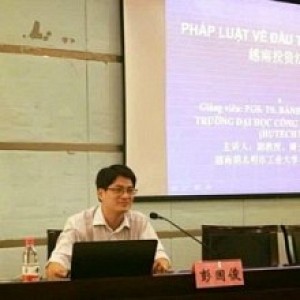
Prof. Banh Quoc Tuan
Thu Dau Mot University
Thu Dau Mot University