
Thu Dau Mot University Journal of Science

Search Papers
76 papers
Study on design and fabrication of a prototype equipment used for corrosion inspection on petrochemical tank bottom by magnetic flux leakage method
Dang Quoc Trieu, Vuong Duc Phung, Bui Trong Duy, Tran Minh Tien, Lai Viet Hai, Tran Trong Hieu
Corrosion of the bottom of the petroleum tank may lead to a product leak that could cause a fire or explosion resulting in damage to people and the environment, therefore the test of tank bottom corrosion is necessary to be conducted periodically to prevent the occurrence of the above problems. In non-destructive inspection, the Magnetic Flux Leakage (MFL) method relies on the variation of fluxes caused by defects on the surface of materials to detect corrosion, pitting, or imperfections, which is proved quite effectively with low cost. The project was implemented to develop a prototype of the MFL bottom detection device based on the research results in the world to improve corrosion survey capacity in industrial equipment, as well as to improve the expertise in the Research Team of electronics and automation in the fields of magnetic fields and sensors. As a result, an MFL model using permanent magnets and Hall sensors were fabricated. Survey experiments showed that the machine could detect corrosion defects up to 20% of steel wall thickness in the scanning speed range from 500 mm/s to 1130 mm/s. However, to meet the actual survey needs, the team must continue to improve the device in terms of sensitivity, scanning speed, the ability to operate automatically or semi-automatically, and register for a fire safety inspection.
Investigation of Zn2+ heavy metal handling ability by macadamite activated by H3PO4
Đào Minh Trung, Tran Phuoc Dong, Trịnh Diệp Phương Danh
Investigate the possibility of treating wastewater containing heavy metals Zn2+ with activated carbon material prepared from macadamia shell with chemical activating agent H3PO4, showing high efficiency of adsorption of Zn2+. The results of the study showed that activated carbon with H3PO4 activating agent has high adsorption capacity, capable of handling Zn2+ best at pH = 4.5, dosage 1.8 g/L and time is 120 minutes. . The results show similarities with other research results and are capable of treating wastewater containing heavy metals Zn2+.
This article introduces the general issues and benefits of simulation in teaching and scientific research. Thereby, the author illustrates by making 3D drawings, assemblies, videos simulating machine structures for teaching Theoretical mechanics, Construction machine subjects and the author's studies in the mechanical field. The application of simulation in teaching is to create videos by using Solidworks software, simulating the operating principle of machine structures. After that, show the videos to the students, excite them and make the lesson lively. And the simulation application in scientific research is mentioned as the way to use 3D drawings and simulation videos to preview the research results, promptly fix the wrong places. Since then, the research is quick, cost reduction is not worth it. The results of this paper are to point out the unique benefits that contribute positively to simulation in teaching and in scientific research.
The Southeast of Vietnam as a cultural zone and roles of culture - people in the sustainable development of the region
Trần Ngọc Thêm
The Southeast plays a very important role in Vietnam’s economic development. Despite a high concentration of social scientists in the Southeast region, there remains a paradox that the Southeast culture has not been sufficiently researched into. Applying the method of cultural zoning based on the changes of the three dimensions Subject – Space - Time developed by the author, the article concludes that the Southeast is a separate cultural zone besides the Southwest and lists some typical characteristics of the Southeast in terms of cultural elements (focusing on the organizational culture) and the system of cultural personality characteristics of Vietnamese people in the Southeast. An analysis of the Human Development Index (HDI) of the Southeast shows that this development is unbalanced and unsustainable. To achieve balance and sustainability, more investment must be made on the culture and the people; community-village type behaviors should be replaced by community-society type behaviors; and the urban way of living, the urban culture and good urban citizen character should be promoed while limiting the rural/agricultural lifestyle and characteristics.
Publication Information
Publisher
Thu Dau Mot University, Viet Nam
Editor-in-Chief

Assoc. Prof. Nguyen Van Hiep
Thu Dau Mot University
Thu Dau Mot University
Editorial Board
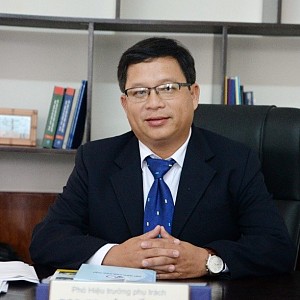
Assoc. Prof. Le Tuan Anh
Thu Dau Mot University
Thu Dau Mot University

PhD. Nguyen Quoc Cuong
Thu Dau Mot University
Thu Dau Mot University

PhD. Doan Ngoc Xuan
Thu Dau Mot University
Thu Dau Mot University

PhD. Nguyen Khoa Truong An
Thu Dau Mot University
Thu Dau Mot University

Assoc. Prof. Nguyen Thanh Binh
Thu Dau Mot University
Thu Dau Mot University

PhD. Le Thi Thuy Dung
Thu Dau Mot University
Thu Dau Mot University

PhD. Ngo Hong Diep
Thu Dau Mot University
Thu Dau Mot University
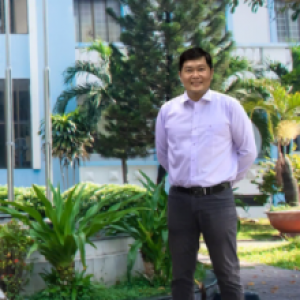
PhD. Nguyen Duc Dat Duc
Ho Chi Minh City University of Industry and Trade
Ho Chi Minh City University of Industry and Trade

Assoc. Prof. Nguyen Van Duc
Animal Husbandry Association of Vietnam
Animal Husbandry Association of Vietnam

PhD. Nguyen Thi Nhat Hang
Department of Education and Training of Binh Duong Province
Department of Education and Training of Binh Duong Province

PhD. Nguyen Thi Cam Le
Vietnam Aviation Academy
Vietnam Aviation Academy

PhD. Trần Hạnh Minh Phương
Thu Dau Mot University
Thu Dau Mot University
M.A. Pham Van Thinh
Thu Dau Mot University
Thu Dau Mot University

PhD. Nguyen Thi Lien Thuong
Thu Dau Mot University
Thu Dau Mot University
Prof. Le Quang Tri
Can Tho University
Can Tho University
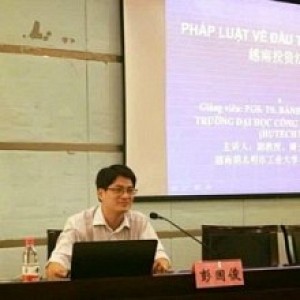
Prof. Banh Quoc Tuan
Thu Dau Mot University
Thu Dau Mot University