
Thu Dau Mot University Journal of Science

Search Papers
5 papers
DESIGN AND VALIDATION OF AN IOT-INTEGRATED AUTOMATED DISTILLATION SYSTEM WITH PID TEMPERATURE CONTROL
Nguyen Anh Vu, Nguyen Thanh Doan, Nguyen Phuong Tra
This paper presents the design, implementation, and empirical evaluation of a sophisticated automated alcohol distillation system. The system integrates modern control theory with Internet of Things (IoT) technology to overcome the limitations of traditional manual distillation, which often suffers from inconsistent product quality, high labor dependency, and significant safety risks. The core of the system employs a REX-C100 PID temperature controller for precise thermal regulation, an ESP8266 microcontroller for IoT connectivity, and an array of sensors including a K-type thermocouple and an MQ-3 alcohol concentration sensor for comprehensive process monitoring and safety. A detailed mathematical model of the distillation process and an enhanced PID control algorithm with feedforward compensation are provided. Experimental results demonstrate a 50% reduction in processing time, an increase in process efficiency from 60% to 90%, and a remarkable improvement in product quality consistency from 70% to 95%, all while maintaining a temperature control accuracy of ±1°C. The system successfully enables remote monitoring and control via the Blynk IoT platform, establishing a robust framework for intelligent, safe, and efficient distillation applicable to both small-scale and industrial production
LIQUID LEVEL STABILIZATION USING FUZZY ALGORITHM WITH PLC S7 1200
Nguyen Thanh Doan, Pham Hong Thanh
This paper presents a method for liquid level stabilization using a fuzzy logic algorithm implemented on the PLC S7-1200. Maintaining liquid levels accurately is a critical requirement in various industrial processes to ensure safety, efficiency, and consistent product quality. The proposed approach employs fuzzy logic to manage the inherent nonlinearities and uncertainties in the system, providing robust control performance under varying operating conditions. The fuzzy controller is designed with rules and membership functions tailored to the dynamic characteristics of the liquid level system. The control logic is programmed and deployed on the Siemens PLC S7-1200, a widely used industrial automation device. Experimental results demonstrate that the fuzzy logic controller effectively stabilizes the liquid level, achieving better performance compared to traditional PID controllers in terms of response time, overshoot, and steady-state error. This study highlights the potential of integrating fuzzy logic with PLCs for advanced industrial automation applications.
MONITORING THE END-EFFECT POSITION OF THE THREE-JOINT ROTARY MANIPULATOR IN MATLAB SIMMECHANICS USING THE PID ALGORITHM
Tan Nguyen Van, Xuan Vinh Ha
Industrial robots have become one of the effective support tools for human labor. Robots are a solution to replace humans in repetitive tasks and in environments where humans cannot work. Robots have become one of the factors responding to the Industrial Revolution 4.0. Automatic control devices require high-precision control quality. Therefore, in this paper, we focus on researching controlling the position of the actuator accurately based on the PID algorithm. First, we study the forward and inverse kinematics of a three-joint robot. Second, we design the robot model on inventor software and transfer the 3d model in inventor software to Matlab Simmechanics. Third, modeling robot model on Simulink to simulate and evaluate the results achieved
With the development of information technology and smart technology to meet the Industrial Revolution 4.0, and to meet life requirements. Automatic control devices require high-precision control quality. Therefore, in this paper, we focus on researching the Sliding mode controller to improve the control quality compared to the PID controller. First, the sliding mode control is designed using the Lyapunov algorithm. Next, the process of simulating the position signal of a DC motor with a PID controller is compared with a sliding mode control to prove the effectiveness of the proposed controller.
Determine the parameters of PID algorithm in liquid level control controlled by PLC s7 1500 using 3d virtual reality model
Pham Hong Thanh, Nguyen Thanh Doan
It is very common to stabilize the preset value (Wanted value) of analog signals such as temperature, pressure, weight, flow, speed in automatic control. However, these control objects often have some problems such as overshooting, taking a long time to bring the system to a steady value, and large errors. One of the most used systems to overcome these problems is the PID, which is a preset stabilizing system with a quick function that returns the system to the set value in a short time without overshooting. error is close to zero. However, determining the scale parameters Ki, integral Kp, and differential Kd for the system to work optimally is a problem that needs to be studied. This paper presents how to accurately determine differential, integral, and scale coefficients according to 3D virtual reality model. Used a lot in simulation modeling for training and practical applications.
Publication Information
Publisher
Thu Dau Mot University, Viet Nam
Editor-in-Chief

Assoc. Prof. Nguyen Van Hiep
Thu Dau Mot University
Thu Dau Mot University
Editorial Board
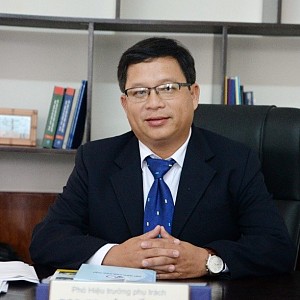
Assoc. Prof. Le Tuan Anh
Thu Dau Mot University
Thu Dau Mot University

PhD. Nguyen Quoc Cuong
Thu Dau Mot University
Thu Dau Mot University

PhD. Doan Ngoc Xuan
Thu Dau Mot University
Thu Dau Mot University

PhD. Nguyen Khoa Truong An
Thu Dau Mot University
Thu Dau Mot University

Assoc. Prof. Nguyen Thanh Binh
Thu Dau Mot University
Thu Dau Mot University

PhD. Le Thi Thuy Dung
Thu Dau Mot University
Thu Dau Mot University

PhD. Ngo Hong Diep
Thu Dau Mot University
Thu Dau Mot University

PhD. Nguyen Duc Dat Duc
Ho Chi Minh City University of Industry and Trade
Ho Chi Minh City University of Industry and Trade

Assoc. Prof. Nguyen Van Duc
Animal Husbandry Association of Vietnam
Animal Husbandry Association of Vietnam

PhD. Nguyen Thi Nhat Hang
Department of Education and Training of Binh Duong Province
Department of Education and Training of Binh Duong Province

PhD. Nguyen Thi Cam Le
Vietnam Aviation Academy
Vietnam Aviation Academy

PhD. Trần Hạnh Minh Phương
Thu Dau Mot University
Thu Dau Mot University

M.A. Pham Van Thinh
Thu Dau Mot University
Thu Dau Mot University

PhD. Nguyen Thi Lien Thuong
Thu Dau Mot University
Thu Dau Mot University
Prof. Le Quang Tri
Can Tho University
Can Tho University
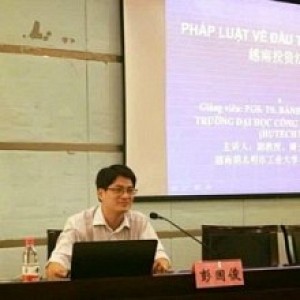
Prof. Banh Quoc Tuan
Thu Dau Mot University
Thu Dau Mot University