
Thu Dau Mot University Journal of Science

Search Papers
4 papers
MODALITY IN NEWS DISCOURSE ON NATURAL DISASTERS: A STUDY OF THE UNITED KINGDOM PRESS
Phan Tuan Ly, Hoang Ngoc Thanh Truc, Kieu Minh Khanh
This article investigates modality in UK news discourse on natural disasters, drawing on a corpus of 50 disaster-related news reports collected from five UK online newspapers. The corpus comprises 23,804 words, with an average length of 476 words per report. Methodologically, the study adopts a mixed-methods design, integrating qualitative descriptive analysis to identify, categorize, and interpret modal expressions in context with quantitative analysis to determine the frequency and distribution of modal resources across the corpus. All texts were annotated and statistically processed using UAM CorpusTool 6.2. The findings reveal that, out of 386 modal tokens, verbal modality overwhelmingly predominates (328 tokens; 85%), while nonverbal modality is comparatively limited (15%), suggesting hard-news reporting favors more determinate, less overtly subjective forms. Modal auxiliaries are the primary resource, led by will (70), can (50), could (43), and would (36). Adjectival modality is diverse but less frequent overall (28 items), with likely (12) most common, followed by possible (9) and unable/sure (7 each). Adverbial modality is rare, with only definitely (2) and maybe/possibly/perhaps (1 each). This paper advances applied linguistics theory and offers practical insights for improving journalistic communication in Vietnam.
This study aims to provide an overview of the global research landscape related to forensic linguistics. Forensic linguistics is defined as the application of linguistic knowledge within legal contexts, offer unique and powerful tools to assist in resolving issues related to court proceedings. To achieve the research objectives, a thematic literature review method combined with statistical techniques was employed to analyze 34 relevant publications sourced from the Scopus database. The study highlights key aspects such as reputable authors, outstanding works, annual publication trends, and the core content of the published books. The findings provide a global overview of forensic linguistics and reveal four trends: discourse analysis in forensic contexts; corpus-based approaches to legal investigations; language-as-evidence with practical implications for courts; and additional aspects of legal language. Consequently, near-term directions to improve Vietnam’s forensic linguistics scholarship are proposed. The findings not only offer a comprehensive view of the current state of forensic linguistics research worldwide but also facilitate access for scholars in Vietnam to engage with and develop relevant studies in this field. This opens new avenues for research and contributes to enhancing the quality of forensic linguistics scholarship in Vietnam in the future.
LINGUISTIC ANALYSIS OF ENGLISH – VIETNAMESE TRANSLATION PRACTICES IN SCIENTIFIC TEXTS: INSIGHTS FROM SYSTEMIC FUNCTIONAL LINGUISTICS
Dang Quoc Trieu, Pham Quynh Giang, Phan Huu Vinh
This research provided a comprehensive linguistic analysis of translation practices applied to two articles on "Advances in Nuclear Fusion and Its Application," employing Halliday's Systemic Functional Linguistics (SFL) as the primary analytical framework. The study meticulously examined the contextual, grammatical, and cohesion aspects of the English source text from The Guardian and its Vietnamese counterpart from VietnamNet. Through comparative analysis, the study identified key linguistic phenomena, translation challenges, and strategic decisions made during the translation process. This research contributes to the field by offering insights into the complexities of translating scientific and technical content between English and Vietnamese, highlighting the role of the SFL in achieving accurate and contextually appropriate translations.
Semantic features of English collocations with the verb ‘make’ in international criminal documents: difficulties with, and sugges-tions for learning and translating
Le Huong Hoa, Luong Duy Thanh
One of the most problematic areas for foreign language learning is collocation. It is often seen as a seemingly insurmountable obstacle to the attainment of native like fluency. The following study takes an approach as a linguistic one by analyzing semantic features of the English collocations with „make‟, which is widely used in the international criminal documents. The thesis analyzing their semantic features according to the categorization of the English collocations with „make‟ used in the international criminal documents in order to find out the difficulties for learners and translators in dealing with these collocations as well as to impose the suggestions for these difficulties.
Publication Information
Publisher
Thu Dau Mot University, Viet Nam
Editor-in-Chief

Assoc. Prof. Nguyen Van Hiep
Thu Dau Mot University
Thu Dau Mot University
Editorial Board
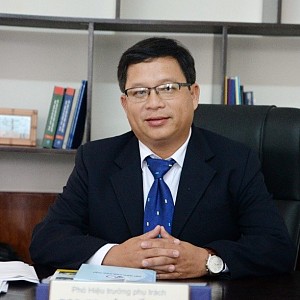
Assoc. Prof. Le Tuan Anh
Thu Dau Mot University
Thu Dau Mot University

PhD. Nguyen Quoc Cuong
Thu Dau Mot University
Thu Dau Mot University

PhD. Doan Ngoc Xuan
Thu Dau Mot University
Thu Dau Mot University

PhD. Nguyen Khoa Truong An
Thu Dau Mot University
Thu Dau Mot University

Assoc. Prof. Nguyen Thanh Binh
Thu Dau Mot University
Thu Dau Mot University

PhD. Le Thi Thuy Dung
Thu Dau Mot University
Thu Dau Mot University

PhD. Ngo Hong Diep
Thu Dau Mot University
Thu Dau Mot University
PhD. Nguyen Duc Dat Duc
Ho Chi Minh City University of Industry and Trade
Ho Chi Minh City University of Industry and Trade

Assoc. Prof. Nguyen Van Duc
Animal Husbandry Association of Vietnam
Animal Husbandry Association of Vietnam

PhD. Nguyen Thi Nhat Hang
Department of Education and Training of Binh Duong Province
Department of Education and Training of Binh Duong Province

PhD. Nguyen Thi Cam Le
Vietnam Aviation Academy
Vietnam Aviation Academy

PhD. Trần Hạnh Minh Phương
Thu Dau Mot University
Thu Dau Mot University

M.A. Pham Van Thinh
Thu Dau Mot University
Thu Dau Mot University

PhD. Nguyen Thi Lien Thuong
Thu Dau Mot University
Thu Dau Mot University
Prof. Le Quang Tri
Can Tho University
Can Tho University
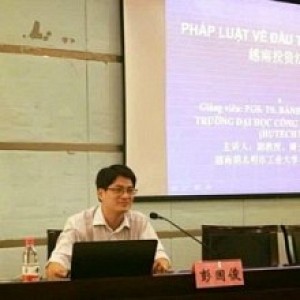
Prof. Banh Quoc Tuan
Thu Dau Mot University
Thu Dau Mot University