
Thu Dau Mot University Journal of Science

Search Papers
5 papers
EFFECT OF DRYING METHOD ON TOTAL PHENOLIC CONTENT AND ANTIOXIDANT ACTIVITY OF BLACK GINGER (KAEMPFERIA PARVIFLORA WALL. EX BAKER) SLICES IN DAK LAK, VIETNAM
Hoang Nhat Phi, Pham Thi My Tram
The herbal plant known as black ginger (Kaempferia parviflora Wall. Ex Baker) is a member of the Zingiberaceae family and is extensively distributed in tropical and subtropical regions of Asia. Traditionally, black ginger is used as a health-enhancing herb to relieve joint pain, digestive disorders, and infections.
This study aimed to assess how drying method (sunlight, dried in an oven) affected the moisture content, total phenolic content, and antioxidant activity of slices of black ginger root and rhizome. Total phenolic content was measured using the UV-vis spectrophotometry method with a gallic acid standard. The DPPH free radical scavenging experiment was also used to assess the extracts' antioxidant potential.
Phytochemical screening results showed that black ginger rhizomes and roots had many secondary metabolites, such as alkaloids, flavonoids, polyphenols, and tannins. The highest total phenolic content was found in sliced black ginger rhizomes dried at 60°C (69.15 mg GAE/g extract). Moreover, black ginger samples all had relatively good antioxidant activities, with IC50 values 42.34 to 67.14 times higher than the IC50 of ascorbic acid. The investigation results on drying temperature's effects on TPCs, and the antioxidant activities of black ginger rhizomes and roots support knowledge and experience in using dried black ginger as raw materials for food and pharmaceutical industries.
Mango leaves (Mangifera indica) are widely used in traditional medicine and have gained scientific attention for their broad biological activities. Rich in bioactive compounds like mangiferin, flavonoids, phenolic acids, and terpenoids, mango leaves exhibit antioxidant, anti-inflammatory, anti-diabetic, antihypertensive, antimicrobial, gastroprotective hepatoprotective, neuroprotective and other bioactivities. These activities are linked to their ability to neutralize free radicals, modulate signaling pathways, and inhibit pathogenic microorganisms. Mango leaf extracts show promise in managing metabolic disorders, skin conditions, and age-related damage. Despite promising preclinical results, further clinical studies are needed to validate their therapeutic potential and safety in humans.
Exploring phenolic contents, antioxidant and in vitro anti-inflammatory activities of Ficus hispida L.f. leaves
Vu Cong Danh
Ficus hispida L.f. (FH) is among the widely cultivated tree species in Asian regions. The aim of this work was to determine phenolic and flavonoid contents, antioxidant, in vitro anti-inflammatory activities of FH extracts prepared with methanol (ME), ethanol (ET) and ethyl acetate (EA). The extract obtained from ethyl acetate contained the highest total phenolic and flavonoid contents (92.75 +/- 5.14 mg GAE/g and 5.67 +/- 0.65 mg QE/g), followed by ME and ET. The capacity to scavenge ABTS free radical of the extracts followed the order: EA > ME > ET while their DPPH activity differed insignificantly. The inhibitory effect of EA and ME (IC¬50 = 362.84 +/- 29.05 and 386.95 +/- 11.10 ug/mL, respectively) were higher than that of ET. Correlation analysis showed a high positive correlation between total phenolic content and ABTS activity. The findings of the study would be useful for development of new nature-derived agents for prevention and treatment of diseases.
A review on water mint (Mentha aquatica L.): Phenolic compounds and essential oils
Vi Nguyen Phuong Truong, Nhan Thi Thanh Vo, Tram Thi My Pham
Mentha aquatica L. (water mint) is known as a medicinal plant that has many novel compositions. The phenolic compounds and essential oils in Mentha aquatica L. played an important role in many types of diseases treatments such as flatulence, anorexia, indigestion, ulcerative colitis, etc. However, there are still little data concerning these compounds and their functions. The aim of this study was to review the biological activities, phenolic compounds, and essential oils in Mentha aquatica L.
Spent Coffee Grounds Collected in Ho Chi Minh City: A Good Source of Phenolic Acids and Fatty Acids
Vũ Công Danh, Vũ Thị Quyền , Nguyễn Hà Diệu Trang
Coffee is among the favorite drinks in Vietnam and many other countries. Production and consumption of coffee have released a huge amount of spent coffee ground. This study aimed to determine phenolic acids and fatty acids of spent coffee grounds collected in Ho Chi Minh city and how phenolic acid profile was affected by different environmentally friendly extractants. The results showed that average level of chlorogenic acid in ethanol/water extracts (840.4 779.9 ug/g) was significantly higher compared to water extracts (300.0 ug/g). Furthermore, the average total level of phenolic acids in ethanol/water extracts (1215.3 ug/g dry weight) was greater than that in the water extracts (779.9 ug/g dry weight). This indicated that ethanol/water outperformed water in regard to extraction of phenolic acids in the spent coffee grounds. Oil extracted from the spent coffee grounds was rich in linoleic acid (61 ug/g) and palmitic acid (47 ug/g). The findings of our study showed that the spent coffee grounds originating in Vietnam are a good source of phenolic acids and polyunsaturated fatty acids that could be utilized for food and nutraceutical production.
Publication Information
Publisher
Thu Dau Mot University, Viet Nam
Editor-in-Chief

Assoc. Prof. Nguyen Van Hiep
Thu Dau Mot University
Thu Dau Mot University
Editorial Board
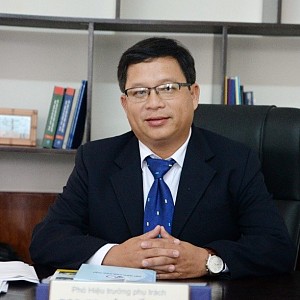
Assoc. Prof. Le Tuan Anh
Thu Dau Mot University
Thu Dau Mot University

PhD. Nguyen Quoc Cuong
Thu Dau Mot University
Thu Dau Mot University

PhD. Doan Ngoc Xuan
Thu Dau Mot University
Thu Dau Mot University

PhD. Nguyen Khoa Truong An
Thu Dau Mot University
Thu Dau Mot University

Assoc. Prof. Nguyen Thanh Binh
Thu Dau Mot University
Thu Dau Mot University

PhD. Le Thi Thuy Dung
Thu Dau Mot University
Thu Dau Mot University

PhD. Ngo Hong Diep
Thu Dau Mot University
Thu Dau Mot University

PhD. Nguyen Duc Dat Duc
Ho Chi Minh City University of Industry and Trade
Ho Chi Minh City University of Industry and Trade

Assoc. Prof. Nguyen Van Duc
Animal Husbandry Association of Vietnam
Animal Husbandry Association of Vietnam

PhD. Nguyen Thi Nhat Hang
Department of Education and Training of Binh Duong Province
Department of Education and Training of Binh Duong Province

PhD. Nguyen Thi Cam Le
Vietnam Aviation Academy
Vietnam Aviation Academy

PhD. Trần Hạnh Minh Phương
Thu Dau Mot University
Thu Dau Mot University

M.A. Pham Van Thinh
Thu Dau Mot University
Thu Dau Mot University

PhD. Nguyen Thi Lien Thuong
Thu Dau Mot University
Thu Dau Mot University
Prof. Le Quang Tri
Can Tho University
Can Tho University

Prof. Banh Quoc Tuan
Thu Dau Mot University
Thu Dau Mot University