
Thu Dau Mot University Journal of Science

Search Papers
348 papers
Investigation of Zn2+ heavy metal handling ability by macadamite activated by H3PO4
Đào Minh Trung, Tran Phuoc Dong, Trịnh Diệp Phương Danh
Investigate the possibility of treating wastewater containing heavy metals Zn2+ with activated carbon material prepared from macadamia shell with chemical activating agent H3PO4, showing high efficiency of adsorption of Zn2+. The results of the study showed that activated carbon with H3PO4 activating agent has high adsorption capacity, capable of handling Zn2+ best at pH = 4.5, dosage 1.8 g/L and time is 120 minutes. . The results show similarities with other research results and are capable of treating wastewater containing heavy metals Zn2+.
Students’ difficulties in learning English for specific purpose grammar at the People’s Police University
Lê Hương Hoa, Lê Quang Trúc
This study investigated grammatical difficulties encountered by students of the People’s Police University while learning grammar in ESP courses. The design included questionnaires to teachers and students, and classroom participant observations. The findings indicated that the student respondents only perceived four target features to be difficult to learn. The results also showed that the students’ perceptions of grammatical difficulty were influenced by several factors including the inherent complexity of rules, L1 transfer, students’ differences in language aptitude, students’ infrequency of practice, and teaching methodology. The findings will hopefully be useful for teachers and researchers with an interest in this line of research.
A study of fixed points and hopf bifurcation of hindmarsh-rose model
Phan Văn Long Em
In this article, a class of Hindmarsh-Rose model is studied. First, all necessary conditions for the parameters of system are found in order to have one stable fixed point which presents the resting state for this famous model. After that, using the Hopf’s theorem proofs analytically the existence of a Hopf bifurcation, which is a critical point where a system’s stability switches and a periodic solution arises. More precisely, it is a local bifurcation in which a fixed point of a dynamical system loses stability, as a pair of complex conjugate eigenvalues cross the complex plane imaginary axis. Moreover, with the suitable assumptions for the dynamical system, a small-amplitude limit cycle branches from the fixed point.
This article introduces the general issues and benefits of simulation in teaching and scientific research. Thereby, the author illustrates by making 3D drawings, assemblies, videos simulating machine structures for teaching Theoretical mechanics, Construction machine subjects and the author's studies in the mechanical field. The application of simulation in teaching is to create videos by using Solidworks software, simulating the operating principle of machine structures. After that, show the videos to the students, excite them and make the lesson lively. And the simulation application in scientific research is mentioned as the way to use 3D drawings and simulation videos to preview the research results, promptly fix the wrong places. Since then, the research is quick, cost reduction is not worth it. The results of this paper are to point out the unique benefits that contribute positively to simulation in teaching and in scientific research.
NGHIÊN CỨU SỬ DỤNG BÃ THẢI CÀ PHÊ LÀM CƠ CHẤT TRỒNG NẤM HOÀNG ĐẾ
Nguyen Thi Ngoc Nhi
Việc nghiên cứu ứng dụng bã thải cà phê làm cơ chất trồng nấm Hoàng đế (Calocybe indica) đã giảm bớt vấn đề ô nhiễm môi trường và mang lại hiệu quả kinh tế cao. Kết quả sau 50 ngày thực nghiệm nuôi trồng nấm ở 15 thùng (40 x 30 x 25cm) với 5 nghiệm thức, mỗi nghiệm thức được bố trí lặp lại 3 lần cho thấy, nấm Hoàng đế sinh trưởng và phát triển tốt ở tất cả các nghiệm thức. Đặc biệt, nấm Hoàng đế hoàn toàn sinh trưởng và phát triển được trên nguồn cơ chất 100% bã thải cà phê có khối lượng nấm (0,337c ± 0,055) thu hoạch tương đương với nghiệm thức 100% mùn cưa (0,347c ± 0,023). Khối lượng nấm trung bình cao nhất là nghiệm thức 75%CP và 25%MC (0,793a ± 0,067) có khác biệt thống kê với các nghiệm thức còn lại. Việc áp dụng quy trình trồng nấm Hoàng đế từ bã thải cà phê sẽ hiệu quả hơn nhiều ở những nơi gần các công ty chế biến cà phê hòa tan bởi tận dụng được nguồn cơ chất sẵn có.
Đề xướng CDIO hay sáng kiến CDIO (Conceive Design Implement Operate) là một dự án quốc tế lớn nhằm cải cách chương trình đào tạo và phương pháp giảng dạy của các trường kỹ thuật bậc đại học. Còn AUN-QA (ASEAN Uni versity Network – Quality Assurance) là bộ tiêu chuẩn với các quy tắc chất lượng khắt khe, có tiêu chí cụ thể, rõ ràng, tập trung đánh giá những điều kiện để đảm bảo chất lượng đào tạo của toàn bộ chương trình đào tạo của các trường đại học Đông Nam Á. Từ năm 2013 cho tới nay, trường Đại học Thủ Dầu Một đã ứng dụng không ngừng những tiêu chuẩn và tiêu chí của cả CDIO và AUN vào việc xây dựng chương trình đào tạo, đổi mới phương pháp dạy học và kiểm định chất lượng đào tạo để đáp ứng những tiêu chuẩn khắt khe của những sản phẩm đầu ra, đáp ứng yêu cầu xã hội và hội nhập khu vực, tiến tới hội nhập quốc tế về giáo dục và đào tạo. Ngành Quốc tế học tuy mới được thành lập ở trường Đại học Thủ Dầu Một từ 2019, nhưng cũng đã áp dụng rất triệt để bộ tiêu chuẩn CDIO và AUN từ khâu lập đề án mở ngành cho tới xây dựng đề cương giảng dạy, tuyển sinh đầu vào và đổi mới phương pháp dạy – học. Bài tham luận của chúng tôi sẽ tập trung vào sự kết hợp xây dựng chương trình đào tạo và đổi mới phương pháp giảng dạy theo những bộ tiêu chuẩn CDIO và AUN mà chúng tôi đã và đang áp dụng triển khai có hiệu quả ở ngành Quốc tế học.
NÂNG CAO CHẤT LƯỢNG HỌC TẬP NHÓM THÔNG QUA VIỆC TĂNG CƯỜNG HỌC TẬP CÁ NHÂN VÀ VAI TRÒ CỦA GIẢNG VIÊN TRONG DẠY HỌC TÍCH CỰC
Trần Lê Thăng Đồng, Đàm Minh Tùng, Nguyễn Chiến Thắng
Vận dụng và cải tiến các hình thức học và dạy học theo hướng tích cực luôn là những hoạt động thiết yếu trong việc cải thiện chất lượng đào tạo theo CDIO. Trong bài viết này, chúng tôi tập trung phân tích các ưu và khuyết điểm của việc học tập cá nhân cũng như học tập nhóm trong trường Đại học dựa trên một loạt các quan sát, phỏng vấn và thảo luận nhóm, qua đó đề xuất một số phương pháp để nâng cao hiệu quả học tập của sinh viên trong các môn học và làm đồ án. Mặc dù tất cả chúng ta đều nhận thức rõ ràng việc học tập nhóm đem lại những hiệu quả rõ rệt, nhưng kết quả là luôn có sự khác biệt trong quá trình hoàn thành nhiệm vụ giữa các sinh viên có trình độ kiến thức và tư duy không đồng đều nhau. Do đó, vấn đề trọng tâm được đặt ra là phát triển các kỹ năng giao tiếp cá nhân trong việc xây dựng nhóm. Việc tập trung vào thảo luận nhóm được theo dõi thông qua việc lấy ý kiến của từng sinh viên cuối cùng cũng đã cho thấy những phản hồi tích cực mặt dù vẫn còn một số sinh viên cho rằng phương pháp mới đòi hỏi họ phải dành nhiều thời gian hơn so với cách học bình thường, Tuy nhiên quan trọng hơn, từ việc lấy ý kiến này, chúng tôi cũng thu nhận được thêm một số phương pháp học tập mới cũng như cách thức tự hoàn thiện bản thân từ chính các sinh viên của chúng tôi.
Đảm bảo chất lượng là sự cải tiến liên tục, có hệ thống, có cấu trúc đến chất lượng trong việc duy trì và nâng cao chất lượng. Hệ thống đảm bảo chất lượng bao gồm 02 yếu tố: Đảm bảo chất lượng bên ngoài là đề cập đến hệ thống đảm bảo chất lượng được vận hành bởi các tổ chức ở bên ngoài các cơ sở giáo dục; Đảm bảo chất lượng bên trong đề cập đến hệ thống đảm bảo chất lượng được thiết lập và vận hành bởi chính các cơ sở giáo dục đại học. Nói cách khác, cơ sở giáo dục đại học đóng vai trò chính trong hệ thống đảm bảo chất lượng bên trong. Nhưng để đảm bảo chất lượng, một trong những đòi hỏi quan trọng là trường đại học phải xây dựng và phát triển một hệ thống đảm bảo chất lượng bên trong (Internal Quality Assurance: IQA). Chính vì vậy, bài viết này nhằm mục đích thảo luận những vấn đề cơ bản về IQA trong giáo dục đại học; những vấn đề từ thực tiễn triển khai IQA tại Trường Đại học Thủ Dầu Một sau hơn 10 năm xây dựng và phát triển, xác định những định hướng trong công tác Đảm bảo chất lượng của nhà Trường giai đoạn 2020-2025 và tầm nhìn đến 2030.
The Southeast of Vietnam as a cultural zone and roles of culture - people in the sustainable development of the region
Trần Ngọc Thêm
The Southeast plays a very important role in Vietnam’s economic development. Despite a high concentration of social scientists in the Southeast region, there remains a paradox that the Southeast culture has not been sufficiently researched into. Applying the method of cultural zoning based on the changes of the three dimensions Subject – Space - Time developed by the author, the article concludes that the Southeast is a separate cultural zone besides the Southwest and lists some typical characteristics of the Southeast in terms of cultural elements (focusing on the organizational culture) and the system of cultural personality characteristics of Vietnamese people in the Southeast. An analysis of the Human Development Index (HDI) of the Southeast shows that this development is unbalanced and unsustainable. To achieve balance and sustainability, more investment must be made on the culture and the people; community-village type behaviors should be replaced by community-society type behaviors; and the urban way of living, the urban culture and good urban citizen character should be promoed while limiting the rural/agricultural lifestyle and characteristics.
Occupation-based social structure in Binh Duong Province, 1999-2009
Prof. Bui The Cuong, Vũ Mạnh Lợi
Binh Duong has rapidly transformed during the period 1999-2009, from a agricultural province to industrial one. The paper explores the shift of occupation-based social structure of Binh Duong during that period. Using the data sets of Census 1999 and 2009, the paper analyses the evolution of the occupational figure in Binh Duong by ten occupational categories and four occupational strata, and the differences in this figure by residence, gender, ethnic, and religious variables. Findings show that the occupational structure of Binh Duong is more developed than the one of the Southern Key Economic Zone. Its change in rural areas is more significant than in urban areas. There are not considerable differences by gender, ethnicity, and religiousness. The findings are suggestive for a further analysis using the data set of Census 2019 on the evolution of occupational figures in Binh Duong during the previous twenty years (1999-2019).
Cultural practices of the Khmer in Binh Duong - Historical particularism approach
PhD. Tran Hanh Minh Phuong
In 2014, Binh Duong has 2.885 the Khmer people, being the second largest ethnic minority compared to the Hoa people. They have contributed to the multi-ethnic culture of Binh Duong. Hundreds of works on the Khmer in the Mekong Delta considered their culture as a typical of Theravada Buddhist culture in Vietnam but this proposition is not suitable for the Khmer community in An Binh, Phu giao district who is this object of this study. By qualitative data sources from in-depth interviews, participant observations and approach to the historical particularism, this study documented the cultural characteristics of the Khmer in An Binh and analyzed the factors that make culture of the Khmer in An Binh different from the culture of the Khmer in the Mekong Delta. Natural conditions and socio-historical context make the cultural practices of the Khmer in An Binh more similar to the culture of the ethnic groups in the Central Highlands than the Khmer culture in the Mekong delta, especially, customs and folk beliefs.
On the basis of coordinating the sources of history materials from Vietnam and China, together with the latest archaeological achievements of Ho citadel, the article has delineated territory, confirmed the chronology frame with the Kings of this kingdom in relation to post-Champa Empire. It is from the aftermath of Vijaya, the two parts of Aryaru (Phu Yen) and Kauthara (Khanh Hoa) belong to Hoa Anh Kingdom, in which, Le Thanh Tong is crowned as Ban La Tra Duyet; the rebellion of this King is the cause for the second conquest, formally taking Ling Chan/ Da Bia as the landmark; Trai A Ma Phat Am is designated as Hoa Anh’s King on the remaining land of Kauthara, but immediately incorporated into Panduranga, forming the state of post-Champa.
Publication Information
Publisher
Thu Dau Mot University, Viet Nam
Editor-in-Chief

Assoc. Prof. Nguyen Van Hiep
Thu Dau Mot University
Thu Dau Mot University
Editorial Board
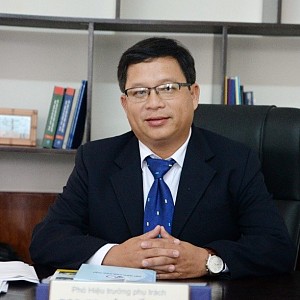
Assoc. Prof. Le Tuan Anh
Thu Dau Mot University
Thu Dau Mot University

PhD. Nguyen Quoc Cuong
Thu Dau Mot University
Thu Dau Mot University

PhD. Doan Ngoc Xuan
Thu Dau Mot University
Thu Dau Mot University

PhD. Nguyen Khoa Truong An
Thu Dau Mot University
Thu Dau Mot University

Assoc. Prof. Nguyen Thanh Binh
Thu Dau Mot University
Thu Dau Mot University

PhD. Le Thi Thuy Dung
Thu Dau Mot University
Thu Dau Mot University

PhD. Ngo Hong Diep
Thu Dau Mot University
Thu Dau Mot University

PhD. Nguyen Duc Dat Duc
Ho Chi Minh City University of Industry and Trade
Ho Chi Minh City University of Industry and Trade
Assoc. Prof. Nguyen Van Duc
Animal Husbandry Association of Vietnam
Animal Husbandry Association of Vietnam

PhD. Nguyen Thi Nhat Hang
Department of Education and Training of Binh Duong Province
Department of Education and Training of Binh Duong Province

PhD. Nguyen Thi Cam Le
Vietnam Aviation Academy
Vietnam Aviation Academy

PhD. Trần Hạnh Minh Phương
Thu Dau Mot University
Thu Dau Mot University
M.A. Pham Van Thinh
Thu Dau Mot University
Thu Dau Mot University

PhD. Nguyen Thi Lien Thuong
Thu Dau Mot University
Thu Dau Mot University
Prof. Le Quang Tri
Can Tho University
Can Tho University
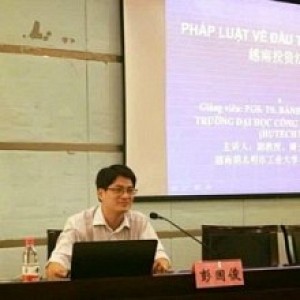
Prof. Banh Quoc Tuan
Thu Dau Mot University
Thu Dau Mot University